Maybe you’ve been dealing with symptoms you can’t quite explain, and your healthcare provider recommended a urine mycotoxin test.
The results came back positive.
And now you’re looking around your house thinking: Wait… does this mean there’s mold in my home?
Or maybe you’re coming at this from the opposite direction. You already know you have a mold or moisture problem at home, you’ve started researching mycotoxins, and now you’re wondering whether testing your body could tell you more.
This is where things can get confusing fast.
Search for “mycotoxin testing,” and you’ll find tests for your body, tests for your home, different laboratory methods, different compounds, and plenty of claims about what the results supposedly mean.
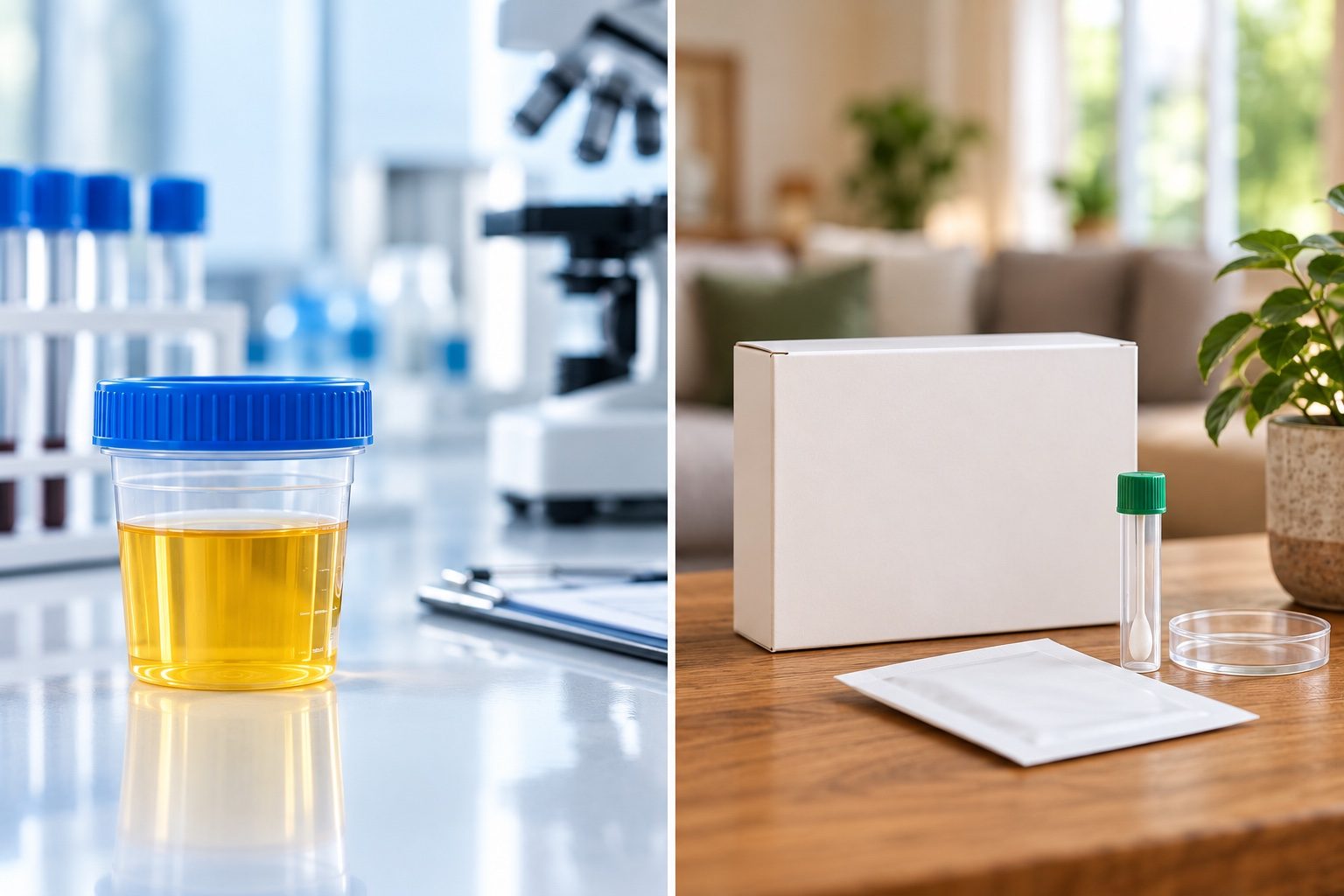
But urine mycotoxin tests and home mycotoxin tests are not two versions of the same test. They look at two completely different samples and answer different questions.
A urine mycotoxin test looks for specific mycotoxins or their metabolites in a biological sample.
A home mycotoxin test looks for specific mycotoxins in an environmental sample, such as settled household dust.
And neither test, by itself, can tell you the thing most people really want to know:
“Is something in my home making me sick?”
That question requires more context.
So let’s break down what each test can actually tell you, what it can’t, what the research says, and what to do if you’re trying to understand whether your indoor environment deserves a closer look.
Urine Mycotoxin Tests vs. Home Mycotoxin Tests: A Quick Comparison
The easiest way to understand the difference is to start with what’s actually being tested.
Urine Mycotoxin Test | Home Mycotoxin Test | |
What gets tested? | A urine sample | Dust, surface material, or another environmental sample |
What does it detect? | Specific mycotoxins or their metabolites | Specific mycotoxins present in the collected sample |
What does it measure? | Biological markers of exposure | Environmental contamination |
Can it identify mold in your home? | No | Not necessarily |
Can it identify the source of exposure? | No | Not by itself |
Can it diagnose mold-related illness? | No | No |
Who should interpret it? | A qualified healthcare professional | A qualified environmental professional familiar with the testing method |
Neither gives you the whole picture on its own.
And importantly, neither can establish that something detected in a particular indoor environment caused someone’s symptoms.
What they can do is provide different pieces of information. Understanding what those pieces actually mean can help you ask much better questions about both your health and your home.
What Is a Urine Mycotoxin Test?
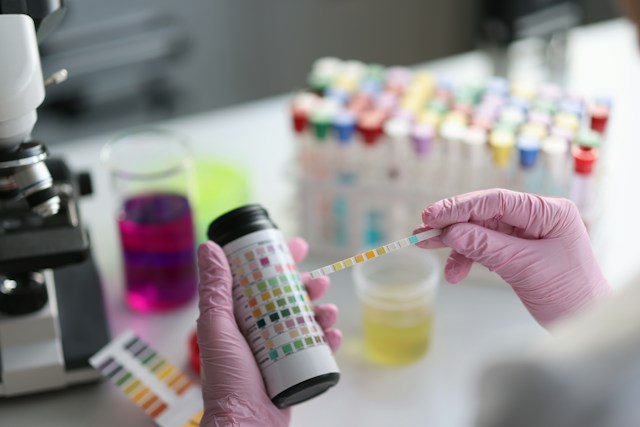
A urine mycotoxin test analyzes a urine sample for selected mycotoxins or substances produced when the body processes them.
Mycotoxins are naturally occurring chemical compounds produced by certain fungi. Some have well-documented toxic effects under particular exposure conditions, especially when people consume contaminated food.
Depending on the laboratory and panel, a urine mycotoxin test may look for compounds such as:
Ochratoxin A: A mycotoxin associated with certain Aspergillus and Penicillium species.
Aflatoxins: Mycotoxins produced by certain Aspergillus species and particularly relevant to food contamination.
Trichothecenes: A large family of mycotoxins produced by several fungal genera.
Zearalenone: A mycotoxin commonly associated with certain Fusarium species.
Citrinin: A mycotoxin produced by certain Aspergillus, Penicillium, and Monascus species.
Not every laboratory looks for the same compounds, and testing methods can differ.
That matters because two tests both labeled “urine mycotoxin test” may not necessarily be measuring the exact same things in the exact same way.
What Can a Urine Mycotoxin Test Actually Tell You?
At its most basic level, a urine mycotoxin test can tell you whether the specific mycotoxins or metabolites included in the test were detected in the submitted sample and, depending on the method, at what concentration.
Researchers do use urinary biomarkers to study human exposure to certain mycotoxins, particularly those associated with food.
A comprehensive scientific review published in Toxins, for example, examined how multiple mycotoxins are metabolized and their potential use as biomarkers of exposure. The researchers also emphasized an important limitation: identifying and validating reliable biomarkers remains an ongoing scientific challenge.
Here’s where things get tricky.
Detecting a substance in urine is not the same as knowing where it came from, whether it caused your symptoms, or whether that particular concentration represents a harmful exposure.
And if your immediate question is, “Okay, but did it come from my house?” the urine test can’t answer that by itself.
Those questions require additional evidence and appropriate clinical interpretation.
Does a Positive Urine Mycotoxin Test Mean You Have Mold Toxicity?
Not necessarily.
This is one of the most important things to understand when looking at urine mycotoxin results.
In a 2015 report, the Centers for Disease Control and Prevention (CDC) cautioned against using unvalidated urine mycotoxin tests to diagnose illness associated with mold exposure.
Why?
For one, mycotoxins can be detected in healthy people because exposure can occur through ordinary dietary sources. The CDC also noted that clinically validated urinary thresholds for predicting mold-related illness had not been established.
The American College of Medical Toxicology reinforced these concerns in its 2025 position statement, emphasizing that detecting mycotoxins in urine does not establish that someone inhaled those mycotoxins in a water-damaged building.
That doesn’t mean your symptoms aren’t real or shouldn’t be investigated.
It means a positive urine result is one piece of information, not a diagnosis or a map pointing back to your house.
Your healthcare provider can evaluate the result alongside your symptoms, health history, potential exposures, and other relevant information.
What Is a Home Mycotoxin Test?
Now let’s move from the person to the building.
A home mycotoxin test analyzes an environmental sample for specific mycotoxins.
Depending on the testing method, that sample might come from household dust, building materials, or surfaces.
Some laboratories use analytical techniques such as liquid chromatography coupled with mass spectrometry (LC-MS/MS) to identify and quantify individual mycotoxins.
So while a urine test asks, essentially, “What was detected in this biological sample?” an environmental test asks “What was detected in this sample collected from the environment?”
That’s an important distinction.
Can Mycotoxins Actually Be Found in Household Dust?
Yes.
Researchers have successfully identified mycotoxins in settled dust collected from indoor environments.
A 2022 study published in Analytical Chemistry evaluated mass spectrometry methods for detecting mycotoxins in household dust. Researchers analyzed 21 residential dust samples and detected several fungal metabolites, including compounds associated with certain indoor fungi.
But there was an interesting finding.
Positive samples weren’t limited to homes with known mold infestations.
Researchers noted that mycotoxins can make their way into household dust through multiple pathways.
In other words, finding a mycotoxin in your dust does not automatically mean you’ve found active mold growth inside your home.
A separate scientific review published in 2024 looked at methods used to identify mycotoxins in buildings. Researchers found that laboratory techniques can detect multiple mycotoxins in environmental samples, but they also identified ongoing challenges involving sampling methods, analytical reliability, and interpretation.
This is still an evolving area of research.
And currently, there are no broadly accepted health-based thresholds that tell us exactly what a particular concentration of a mycotoxin in residential dust means for the health of the people living there.

What Can a Home Mycotoxin Test Actually Tell You?
Let’s say you send in a household dust sample and the laboratory detects a mycotoxin.
What have you learned?
You’ve learned that the specific compound was detected in that particular sample.
That may be useful information. But there are still quite a few things it doesn’t tell you.
A home mycotoxin result cannot independently determine:
Whether mold is actively growing somewhere in your home.
Where a potential moisture or mold problem is located.
How extensive any contamination might be.
Whether anyone inhaled or absorbed the detected compounds.
Whether the detected concentration represents a health risk.
Whether your indoor environment caused someone’s symptoms.
The results are also influenced by what you collected and where you collected it.
A dust sample from one room, for example, may not accurately represent conditions throughout an entire house.
That’s why environmental test results make more sense when they’re viewed alongside the building itself: its moisture history, previous water damage, visible conditions, HVAC system, humidity, and other relevant findings.
Is a Home Mycotoxin Test the Same as a Mold Test?
No.
And this is an easy distinction to miss.
Mold testing looks for evidence of fungi. Mycotoxin testing looks for specific chemical compounds that certain fungi can produce.
They’re related, but they are not interchangeable.
A mold species that is capable of producing a particular mycotoxin does not necessarily produce that compound every time it grows. Environmental conditions matter.
The American College of Medical Toxicology specifically emphasizes this distinction, noting that fungal species and their mycotoxin products shouldn’t be treated as interchangeable indicators of exposure.
There are also different ways to test for mold itself.
Some methods collect airborne spores. Others analyze surface samples or settled dust.
For example, The Dust Test uses PCR technology to screen household dust for 36 mold species.
That’s different from measuring mycotoxin concentrations.
A mold DNA test may help you understand which targeted fungal species are represented in the dust you collected. It does not tell you how much mycotoxin is present, and it cannot tell you whether the detected mold is actively growing somewhere in the home.
Both types of testing have limitations.
And if you’re dealing with a suspected moisture or mold problem, neither replaces actually investigating the building.

Can You Compare Urine Mycotoxin Results With Home Mycotoxin Results?
Technically, you can put the reports next to each other.
The harder question is what you can conclude from the comparison.
Imagine this:
Your urine mycotoxin test shows detectable ochratoxin A.
You’re concerned it could be coming from your environment, so you test your home.
That test also detects ochratoxin A.
It’s completely reasonable to look at those two reports and think:
“There it is. We found the connection.”
But scientifically, we’re not there yet.
Ochratoxin A can be associated with several fungal species, but it can also enter the body through contaminated food.
The two tests may use different analytical methods, detection limits, sample types, and reporting units.
They’re also capturing very different windows of information. Your urine reflects biological processes occurring over a particular period. Settled household dust can contain material that accumulated over a much longer timeframe.
So even when the names on the reports match, the tests cannot establish that the home was the source of the urinary finding.
Think of the two results as clues, not proof of a chain of events.
At present, there is no established clinical method for matching a person’s commercial urine mycotoxin results to a residential dust mycotoxin test and reliably determining that the home caused the biological finding.
Does a Positive Urine Mycotoxin Test Mean There’s Mold in Your Home?
No.
A urine mycotoxin test cannot tell you where an exposure occurred.
One major reason is food.
Certain mycotoxins occur naturally in agricultural products, including grains, nuts, coffee, dried fruits, and other foods.
In its 2025 position statement, the American College of Medical Toxicology identified diet as the most important source of human mycotoxin exposure.
That doesn’t mean you should ignore water damage, musty odors, visible mold, or other signs that something may be wrong with your home.
It means you shouldn’t use a urine result to diagnose the building.
If you’re concerned about your indoor environment, investigate the home based on what’s happening in the home.

Does Finding Mycotoxins in Your Home Mean They’re in Your Body?
Not necessarily.
This works in the other direction, too.
Detecting something in an environmental sample doesn’t automatically mean someone living in that environment absorbed it.
For exposure to occur, there has to be a pathway connecting the environmental source to the person. Depending on the substance and circumstances, that could involve inhalation, ingestion, or contact.
But a dust result alone can’t tell you how much of a substance became airborne, whether you inhaled it, or how much, if any, entered your body.
That distinction becomes particularly important with mycotoxins.
The American College of Medical Toxicology notes that evidence for significant systemic toxicity from inhaled mycotoxins in typical residential environments remains insufficient.
But there’s another part of this conversation we shouldn’t lose.
There is substantial scientific evidence connecting damp and mold-contaminated buildings with health effects.
Those two statements aren’t contradictory.
They’re a reminder that a water-damaged building is much more complicated than a single toxin.
A water-damaged indoor environment can involve mold spores, fungal fragments, and other microbial materials. Damp conditions can also support bacteria and dust mites.
Some fungi can produce microbial volatile organic compounds, or mVOCs, although their presence and concentrations vary considerably.
Not every health concern associated with a damp building has to be explained by mycotoxins.
What Does the Research Say About Damp Buildings and Health?
This is where the evidence becomes much broader.
The World Health Organization’s Guidelines for Indoor Air Quality: Dampness and Mould reviewed research conducted across multiple countries and climates.
The WHO concluded that people living or working in damp or moldy buildings face increased risks of respiratory symptoms, respiratory infections, and asthma exacerbations.
The review also identified evidence connecting damp indoor environments with allergic conditions and certain less common respiratory diseases.
One of the WHO’s major takeaways was refreshingly practical: prevent persistent dampness and microbial growth.
And that gives us an important way to think about this entire conversation.
You do not need a positive urine mycotoxin test to justify fixing persistent moisture damage or mold growth in your home.
Likewise, a negative urine mycotoxin test doesn’t prove that a water-damaged building is healthy.
Your body and your building are two separate things to investigate.
What Does a Proper Mold Investigation Involve?
A dust result can’t tell you what’s happening behind your walls. Maybe there’s a hidden plumbing leak, moisture building up around the HVAC system, or water intrusion from years ago that was never properly addressed. Finding out means looking at the building itself.
A qualified environmental professional may look at things like:
The building’s history of leaks, flooding, or water intrusion.
Visible evidence of mold or moisture damage.
Moisture levels in building materials.
Humidity and ventilation conditions.
HVAC components and areas where moisture may accumulate.
Locations where hidden mold growth may be suspected.
Whether targeted sampling could help answer a specific question.
This is also why simply collecting more and more samples isn’t always the answer.
The Environmental Protection Agency (EPA) emphasizes that if mold is already visible, laboratory confirmation generally isn’t necessary before corrective action.
When mold is present, finding and correcting the moisture problem is essential.
The EPA also notes that environmental sampling may be useful in certain circumstances, particularly when the source or extent of contamination isn’t clear.
The goal isn’t to build a giant stack of lab reports.
The goal is to understand what’s happening in the building and what, if anything, needs to be corrected.
What Should You Do After a Positive Mycotoxin Test?
This depends on which test came back positive.
If Your Urine Mycotoxin Test Is Positive
Start with the healthcare professional overseeing your care.
Ask what the result can reliably tell you, whether the testing method has established clinical validity for its intended use, and how the findings fit with your symptoms and medical history.
A urine mycotoxin result should not be used by itself to diagnose mold-related illness or determine treatment.
If you’re also worried about your home, treat that as its own question.
Have you had water damage? Persistent moisture? Musty odors? Visible mold? Recurring leaks?
Those are reasons to investigate the building regardless of what your urine test says.
If Your Home Mycotoxin Test Is Positive
First, figure out exactly what you’re looking at.
Which compounds did the laboratory test for? What was detected? Where did the sample come from? What limitations does the laboratory identify?
Then zoom out from the report and look at the building.
Have there been leaks? Is there evidence of moisture damage? Are there areas where mold could be growing?
If there are legitimate environmental concerns, a professional inspection can help determine whether there’s a source that needs to be addressed.
And remember: detecting a mycotoxin doesn’t automatically mean your house needs extensive remediation.
Any corrective work should be based on the actual conditions in the building and a defensible assessment of contamination.
If Both Tests Are Positive
This is probably the scenario most likely to send you down an internet rabbit hole.
Try not to assume one result automatically explains the other.
Instead, let each professional investigate the area they’re actually qualified to evaluate.
Your healthcare provider can assess your health concerns and determine whether additional clinical evaluation makes sense.
An environmental professional can investigate your home for moisture problems, fungal growth, and other relevant building conditions.
The findings may help inform the bigger picture, but the roles remain different:
Medical professionals evaluate the person. Environmental professionals evaluate the building.
Neither should try to substitute for the other.

A Better Way to Approach Mold Concerns in Your Home
When you’re worried that your home could be affecting your health, wanting one definitive test makes perfect sense.
You want to know:
Is there a problem? Where is it? Is it affecting me? And what am I supposed to do about it?
Unfortunately, no single mycotoxin test can answer all four questions.
What you can do is take a systematic approach to understanding the environment around you.
At HomeCleanse, we organize that process using the CLEAR framework.
Correlate: See Where the Clues Line Up
Start with what you already know.
Has the home had water damage? Have you noticed musty odors? Do you have previous inspection reports? Is there visible damage? Have you already completed environmental testing?
When appropriate, dust-based mold testing can add another piece of information by identifying targeted fungal species represented in the collected sample.
If you’ve also done urine mycotoxin testing with your healthcare provider, the two results can be compared to see where they may line up and whether the home needs a closer look.
You’re not trying to diagnose your entire house with one result.
You’re gathering clues.
Locate: Identify the Source
If those clues suggest there may be a mold problem, the next question is where?
A qualified inspection can help identify where contamination may be occurring and, just as importantly, what moisture condition allowed it to happen.
Testing can tell you something about a sample.
Investigation tells you something about the building.
Eliminate: Address the Problem
Once contamination is confirmed and the source is understood, remediation can address affected materials and contamination while the underlying moisture problem is corrected.
The scope of work should be based on what was actually found, not simply on the fact that a test came back positive.
Attest: Verify the Work
How do you know the problem was actually addressed?
Independent post-remediation verification can evaluate whether the agreed-upon remediation objectives were met before the project is considered complete.
That extra step matters because remediation shouldn’t end with, “Well, it looks clean.”
Remain: Help Prevent It From Happening Again
Once you’ve dealt with a mold problem, you don’t want to be right back in the same place six months later.
Long-term moisture management, regular maintenance, and appropriate environmental monitoring can help reduce the likelihood of recurrence.
The goal isn’t to spend your life chasing test results.
It’s to understand why the problem happened, correct it properly, verify the work, and create conditions that make it less likely to happen again.

Understanding Your Home Is a Separate, Important Step
You don’t have to solve your health and your home with the same test.
You have to look at the home itself.
Has there been water damage?
Is moisture getting somewhere it shouldn’t?
Is mold growing somewhere you can’t see?
Was an old problem actually corrected, or just dried out and covered up?
Are there environmental conditions that need to change?
Those questions deserve answers regardless of what a urine mycotoxin test shows.
Your healthcare provider is the right person to evaluate what’s happening in your body.
We help you figure out what’s happening in your home.
If you’re concerned about mold in your home and don’t know where to start, connect with our team. We’ll help you understand what you know, what you don’t, and what the appropriate next step looks like.

Frequently Asked Questions About Urine and Home Mycotoxin Testing
How long do mycotoxins stay in urine?
There isn’t one detection window that applies to every mycotoxin. It depends on the specific compound, how the body metabolizes it, the amount and timing of exposure, individual biological factors, and the testing method being used.
Can a house contain mycotoxins without visible mold?
Yes. Mycotoxins may be detected in settled dust even when active mold growth isn’t visible. However, environmental detection alone doesn’t prove that hidden mold is actively growing or tell you whether the detected concentration represents a health risk.
Is a home mycotoxin test the same as an ERMI test?
No.
ERMI, or the Environmental Relative Moldiness Index, uses DNA-based measurements of selected mold species in dust. A home mycotoxin test measures specific fungal chemical compounds.
They’re looking at different characteristics of the sample.
ERMI was developed as a research tool and is not recommended by the EPA for routine public use as a diagnostic measure of a home’s safety.
Should I test my home after a positive urine mycotoxin test?
A positive urine result alone doesn’t establish that home testing is necessary.
But if you have independent reasons to suspect an environmental problem, such as previous water damage, persistent moisture, musty odors, or visible mold, those conditions may warrant investigation.
Should I get a urine mycotoxin test if mold is found in my home?
Finding mold in your home doesn’t automatically mean urine mycotoxin testing is medically appropriate.
Major medical organizations caution against using commercial urine mycotoxin tests to diagnose illness caused by indoor mold exposure.
If you’re experiencing symptoms, a qualified healthcare professional can help determine what type of evaluation makes sense for you.
Can a negative urine mycotoxin test rule out mold exposure?
No.
A negative urine result cannot establish that a building is mold-free or that you haven’t encountered fungal materials.
The test only evaluates the selected compounds or metabolites included in that particular analysis.
Have Questions?
A member of our team is here to help! Click on “Get Started ➤” below to book a consultation with a member of the HOMECLEANSE team. We have a few quick questions that will help us put together a roadmap to solve or prevent all of your mold problems.
Two minutes of your time could lead to better health for you and your family.
Must-Have Indoor Air Quality Tools
-

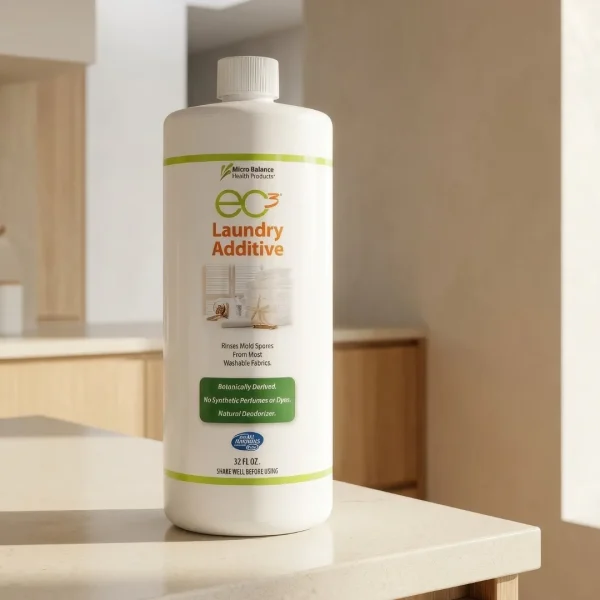
EC3 Laundry Additive
Add EC3 to every rinse cycle to rinse away mold, bacteria and musty odors from...
-
$23.00 Shop Now -
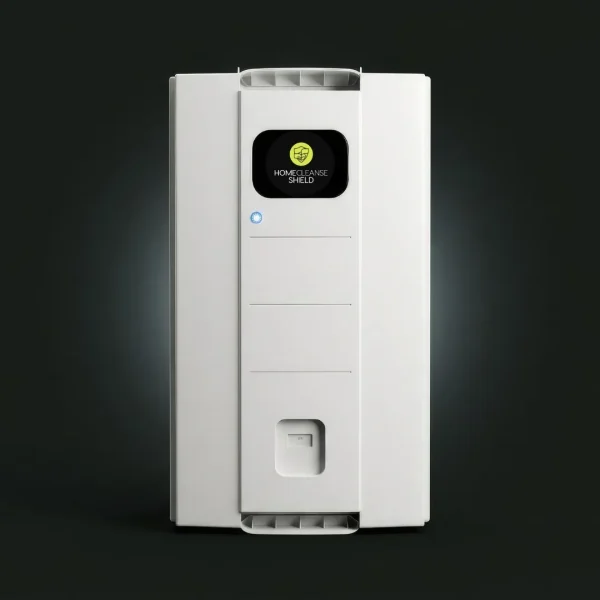
HomeCleanse Shield
Turn your HVAC into the healthiest feature of your home.
-
$2,495.00 Shop Now -
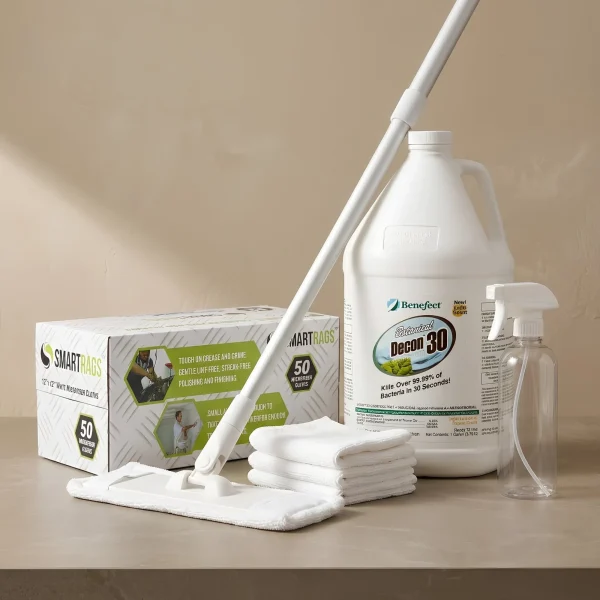
HomeCleanse Cleaning
Take your cleaning to the next level buying all the tools we use to keep...
-
Price range: $299.00 through $549.00 Shop Now -
Mold & Bacteria Contents Cleaning
Remove harmful pollutants that accumulate in the dust of your home. (Options available for renters...
-
Price range: $99.00 through $349.00 Shop Now -
EC3 Mold Solution Concentrate
Micro Balance EC3 Mold Solution Concentrate is a natural botanical that removes mold spores, bacteria,...
-
$33.00 Shop Now -
The Dust Test
Optimizing Air Quality starts with finding what’s not optimal. *Detects 36 different species of mold...
-
$299.00 Shop Now -
EuroClean 4 Gallon Hepa Vacuum
The Euroclean GD930HSP is a 4 Gallon Dry HEPA Vacuum that meets the EPA's standards...
-
$849.00 Shop Now