
In Brief:
PM2.5 refers to fine particulate matter with a diameter of 2.5 micrometers or smaller. These tiny particles can come from outdoor pollution as well as everyday activities inside your home, including cooking, burning candles, using fireplaces, cleaning, and smoking. Because PM2.5 is small enough to travel deep into the lungs and some particles may enter the bloodstream, reducing exposure is an important part of maintaining healthier indoor air.
You can’t always see what’s floating through the air in your home.
Every time you cook dinner, light a candle, open a window, vacuum the floor, or use your fireplace, the mixture of microscopic particles in your indoor air can change. Outdoor smoke and pollution can make their way inside, too.
Some of those particles fall into a category called PM2.5, one of the most widely monitored measurements of air quality.
But what exactly is PM2.5? Where does it come from? And if an indoor air quality monitor suddenly shows a high reading, what are you actually supposed to do about it?
Let’s break down what those tiny particles can tell you about the air inside your home.
What Is PM2.5?
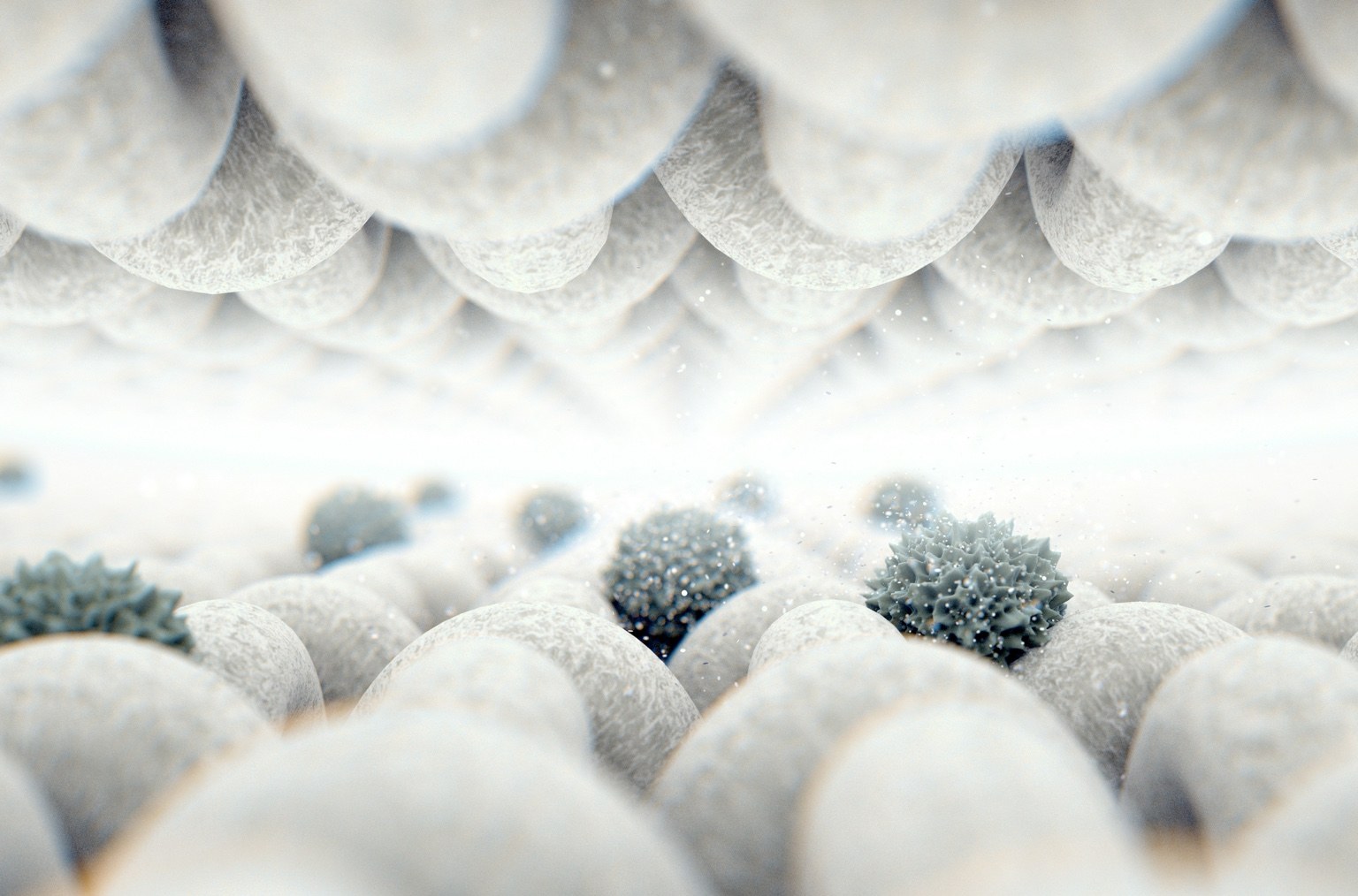
PM2.5 is fine particulate matter that measures 2.5 micrometers (µm) in diameter or smaller.
Particulate matter, often shortened to PM, is not one specific pollutant. It’s a mixture of tiny solid particles and liquid droplets suspended in the air. These particles can vary widely in their size, shape, and chemical composition.
The number tells you about particle size.
So:
PM10 includes particles 10 micrometers in diameter or smaller.
PM2.5 includes fine particles 2.5 micrometers in diameter or smaller.
For perspective, the U.S. Environmental Protection Agency notes that particles 10 micrometers and smaller are already at least five times smaller than the width of a human hair. PM2.5 is smaller still.
PM2.5 DESCRIBES SIZE, NOT WHAT THE PARTICLE IS.
That’s an important distinction.
A PM2.5 reading can tell you that fine particles are present in the air. It cannot, by itself, tell you exactly what those particles are or where they came from.
That’s why PM2.5 monitoring can be an incredibly useful piece of information about your indoor environment, but it should be interpreted in context.
Why Does PM2.5 Matter?
Particle size affects how deeply particulate matter can travel into the respiratory system.
According to the EPA, particles smaller than 10 micrometers can be inhaled deeply into the lungs, and some may even enter the bloodstream. The CDC similarly notes that PM2.5 can reach deep parts of the lungs and may enter the blood.
Research has associated particulate matter exposure with a range of respiratory and cardiovascular effects. Reported effects include irritation of the eyes, nose, and throat; aggravated respiratory disease; difficulty breathing; and cardiovascular effects.
Anyone can be exposed to particle pollution, but some people may be more susceptible to its effects. These include:
Children
Older adults
People with asthma or COPD
People with heart disease
People with certain other underlying health conditions
The goal isn’t to become afraid of every particle in your home. Particles are an unavoidable part of our environment.
The goal is to understand your exposure and reduce unnecessary sources when you can.
Where Does PM2.5 Come From Inside a Home?
When people hear “PM2.5,” they often think about outdoor pollution from highways, factories, or wildfire smoke.
Those absolutely matter. But PM2.5 can also be generated inside your home.
Indoor particulate matter can come from outdoor air entering the building as well as sources and activities inside the home.
Common contributors include:
Cooking
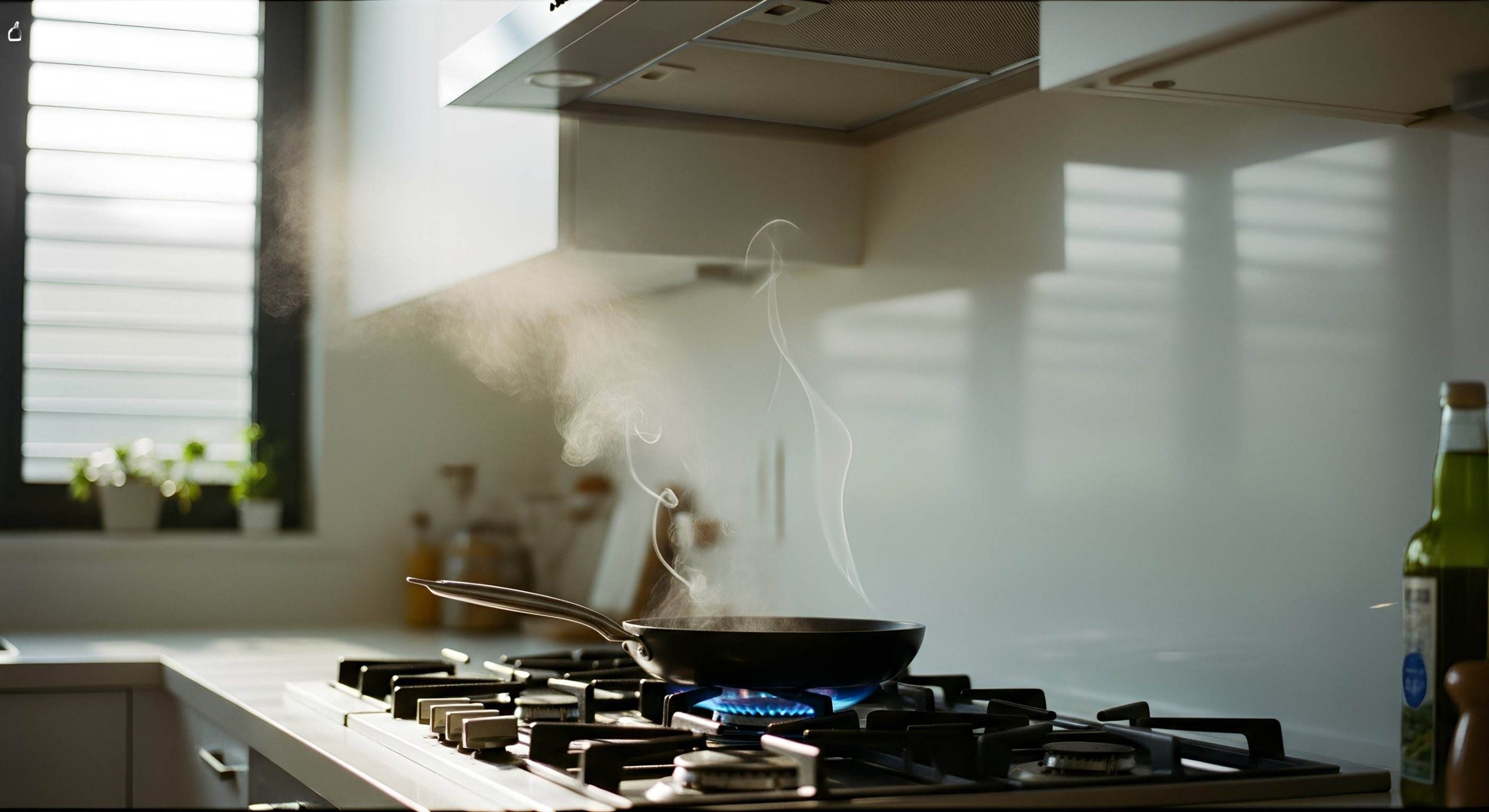
Cooking can generate substantial amounts of particulate matter, particularly methods involving higher temperatures.
Grilling, frying, baking, sautéing, the type of cooking oil used, and even the food being prepared can influence how much particulate matter is generated. Burning or charring food can cause indoor PM levels to increase rapidly.
That means a sudden PM2.5 spike around dinner time may not be mysterious at all.
Your air could simply be telling you that dinner happened.
Candles, Fireplaces, and Other Combustion
Burning materials produces particulate matter.
Potential indoor sources include:
Candles
Incense
Wood-burning fireplaces and stoves
Tobacco smoke
Certain fuel-burning heaters and appliances
Combustion can also release pollutants other than particulate matter, which is why proper ventilation and maintenance of fuel-burning appliances are important.
Outdoor Air
Your house isn’t completely separated from the outdoor environment.
Outdoor PM can enter through:
Open doors
Open windows
Small cracks and gaps
Outdoor air intakes
Ventilation systems
Traffic pollution, wildfire smoke, wood smoke, road dust, industrial emissions, and other outdoor sources can therefore affect indoor particulate levels.
On days when outdoor particle pollution is high, opening the windows to “air out the house” may actually bring more particulate matter indoors.
Dust and Cleaning
Dust isn’t just dirt.
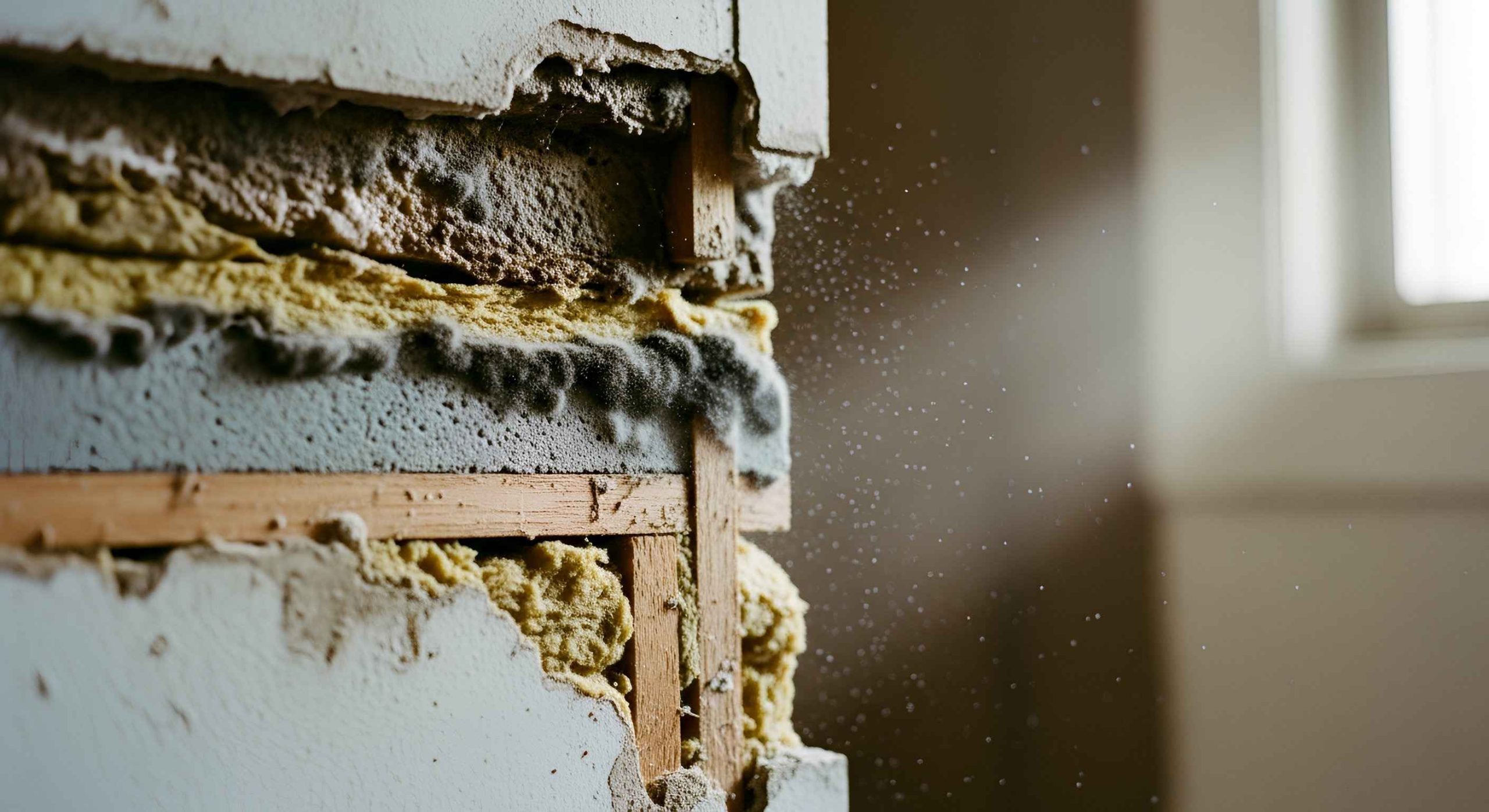
Indoor dust can contain particles from soil, cooking, consumer products, human activity, outdoor pollutants, and biological materials such as pollen, pet dander, dust mites, skin cells, and mold spores.
Once particles settle onto surfaces, activities such as walking, sweeping, dusting, and vacuuming can stir some of that material back into the air.
That’s one reason how you clean matters just as much as whether you clean.
Biological Particles
Indoor particulate matter can also include biological material.
The EPA lists biological contaminants such as pollen, mold spores, pet dander, pest debris, and human skin cells among materials that may be present in indoor dust.
This brings us to an important distinction.
Does High PM2.5 Mean You Have Mold?
No. A high PM2.5 reading does not mean that you have mold.
Mold-related particles can contribute to the overall particulate mixture in an indoor environment, but PM2.5 is a measurement based on particle size, not particle identity.
A PM2.5 monitor cannot look at a particle and say, “That’s mold.”
It also cannot tell you that elevated PM2.5 came from cooking, smoke, outdoor pollution, dust, or another specific source based on the PM2.5 number alone.
Instead, think of an elevated reading as a clue.
If PM2.5 suddenly changes, ask:
What was happening in the home?
Was someone cooking?
Was a candle or fireplace burning?
Was someone vacuuming or cleaning?
Is outdoor air quality poor?
Were windows or doors open?
Does the increase happen at a consistent time or in connection with a particular activity?
If you’re specifically concerned about mold, you need an investigation designed to evaluate mold rather than relying on a general particulate reading.
What Is Considered a Good PM2.5 Level?
This is where PM2.5 gets slightly more complicated.
There isn’t one universal indoor number where everything below it is automatically “safe” and everything above it is automatically “dangerous.”
The World Health Organization’s 2021 Global Air Quality Guidelines recommend PM2.5 levels of:
5 µg/m³ annual average
15 µg/m³ 24-hour average
These are health-based air quality guidelines, not a guarantee that concentrations below those numbers carry zero risk.
In the United States, the EPA regulates PM2.5 in outdoor ambient air through the National Ambient Air Quality Standards. In 2024, the EPA strengthened the annual primary PM2.5 standard to 9.0 µg/m³, while retaining the 24-hour standard of 35 µg/m³.
Those standards serve different purposes and shouldn’t simply be treated as universal pass/fail limits for a single reading from a home monitor.
THE MOST USEFUL PM2.5 NUMBER ISN’T ALWAYS ONE NUMBER.
A single measurement is a snapshot.
A pattern tells you more.
Indoor PM2.5 naturally changes throughout the day. Instead of panicking over every temporary spike, pay attention to your baseline, recurring elevations, how long spikes last, what was happening when they occurred, and whether your actions bring levels back down.
Why Did My PM2.5 Suddenly Spike?
A spike means the concentration of fine particulate matter detected in the air increased.
It does not automatically mean that something catastrophic happened.
Imagine your monitor normally reads relatively low, but every evening around 6:30 the PM2.5 reading climbs.
Before assuming your home has developed a mysterious air quality problem with an impeccable dinner schedule, look at what you’re doing at 6:30.
Are you cooking?
The same detective work applies elsewhere.
If PM2.5 rises when you light candles, that’s useful information.
If it rises when wildfire smoke moves into your area, that’s useful information.
If it rises every time you clean, that’s useful information.
If it remains elevated without an obvious explanation, that’s useful information, too.
Monitoring becomes most powerful when you connect the number with what is actually happening in your environment.
How Can You Reduce PM2.5 Inside Your Home?
The best strategy isn’t simply “buy an air purifier.”
Reducing indoor particulate exposure requires thinking about the entire environment.
1. Control the Source First
If you know what’s generating particles, reducing or eliminating that source is often the most effective first step.
Source reduction is one of the primary ways to reduce indoor particulate matter.
Depending on the source, that could mean:
Reducing candle or incense use
Avoiding smoking indoors
Addressing a malfunctioning combustion appliance
Changing cooking practices
Preventing dust accumulation
Addressing moisture problems that are allowing microbial growth
You don’t want to continuously create a pollution problem and expect filtration to do all the cleanup.
2. Use Your Kitchen Ventilation
Cooking is one of the easiest examples of an indoor activity that can create substantial PM.
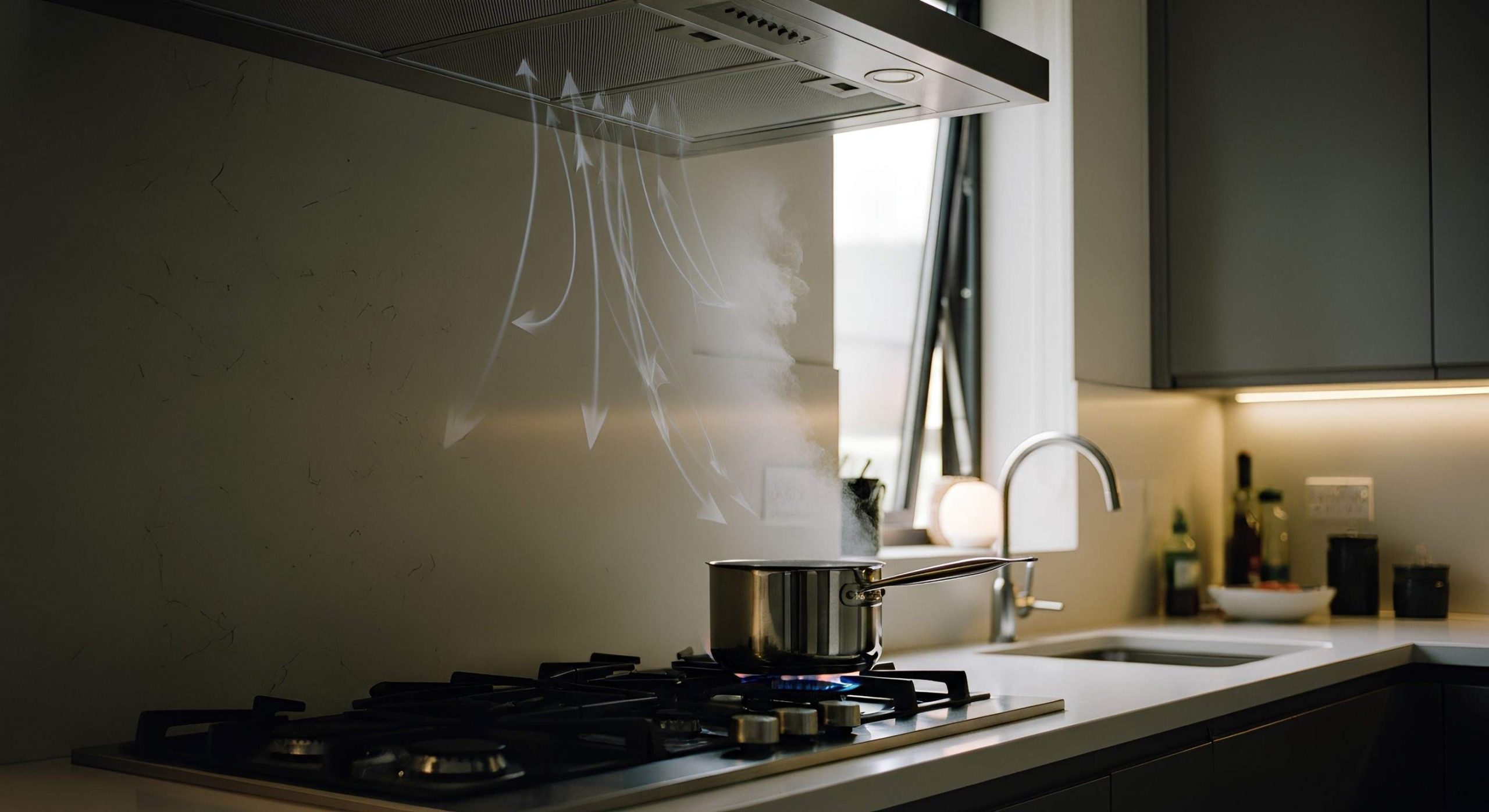
Use a range hood whenever you’re cooking, preferably one that vents outdoors.
The EPA also recommends using back burners when possible because they can improve capture by the hood and leaving the hood running for approximately 10 to 20 minutes after cooking.
If you don’t have an outdoor-vented range hood, other ventilation may help when outdoor conditions are appropriate.
3. Pay Attention to Outdoor Air Quality
Sometimes the source isn’t inside your home at all. Wildfires, traffic, smoke, pollen, and regional pollution can all influence indoor air.
Check outdoor air quality before opening windows for ventilation, particularly during wildfire events or periods of elevated outdoor pollution.
When outdoor particulate levels are high, keeping windows and doors closed and using effective filtration can help reduce the amount of outdoor PM entering and remaining in your indoor environment.
4. Improve Air Filtration
Air filtration can help remove airborne particulate matter.
For central HVAC systems, use a filter rated MERV 13 or as high as the system can accommodate. A higher-efficiency filter isn’t helpful if it creates airflow problems for equipment that wasn’t designed to handle it, so talk with an HVAC professional when you’re unsure.
Portable air cleaners can also help reduce airborne particles when they are appropriately sized for the room and used correctly.
HEPA filtration is particularly effective for particle removal. A true HEPA filter is designed to capture at least 99.97% of particles at 0.3 micrometers, with particles larger and smaller than that most-penetrating size captured at even higher efficiencies.
5. Clean Settled Dust Without Continually Sending It Back Into the Air
Air filtration handles particles while they’re airborne. Cleaning helps address particles that have settled.
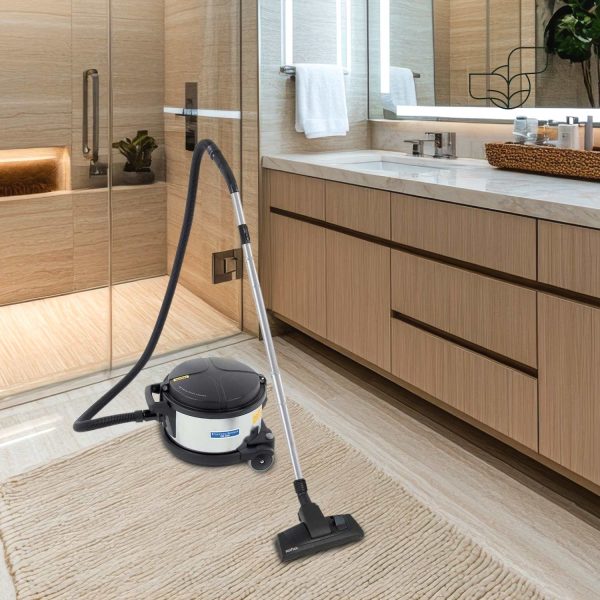
The EPA recommends frequent cleaning to reduce accumulated indoor dust, including vacuuming carpets and furniture and dusting with a damp cloth.
Using a vacuum equipped with a HEPA filter help keep captured dust from simply escaping the vacuum and returning to the air. As for other surfaces, a slightly damp microfiber towel helps keep particulate matter down.
Think of this as managing the particle cycle:
Airborne → Settled → Disturbed → Airborne again
Effective filtration and cleaning work together to interrupt that cycle.
6. Monitor What Happens Next
Once you’ve made a change, look at your data.
Did using the range hood reduce your cooking spikes?
Did upgrading filtration change your typical baseline?
Do levels rise when windows are open?
Do they improve when your air purifier is running?
That’s where monitoring turns PM2.5 from an abstract air-quality measurement into information you can actually use.
Tools That Can Help You Monitor and Reduce Particulate Matter
No single product can create healthy indoor air by itself. Different tools solve different pieces of the problem.
A useful way to think about particulate management is:
MONITOR → IDENTIFY → REMOVE → MAINTAIN
Here’s how that can look inside a home.
Monitor: HomeCleanse Guardian
You can’t respond to a change you don’t know is happening.
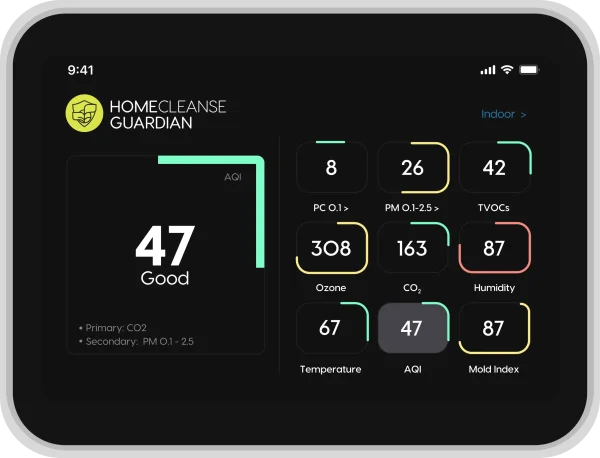
HomeCleanse Guardian continuously tracks multiple indoor environmental measurements, including PM2.5 and PM10, so you can see how particulate levels change throughout the day.
That continuous data can make patterns easier to spot. Instead of relying on one isolated measurement, you can begin asking why levels increased, what was happening at the time, and whether your response helped bring them back down.
Guardian’s particulate sensor provides information about particle concentrations, but remember: a particulate monitor is not a mold detector or source-identification tool.
Its value is visibility.
Remove Airborne Particles: HomeCleanse Shield
Once particles are airborne, filtration becomes part of the strategy.
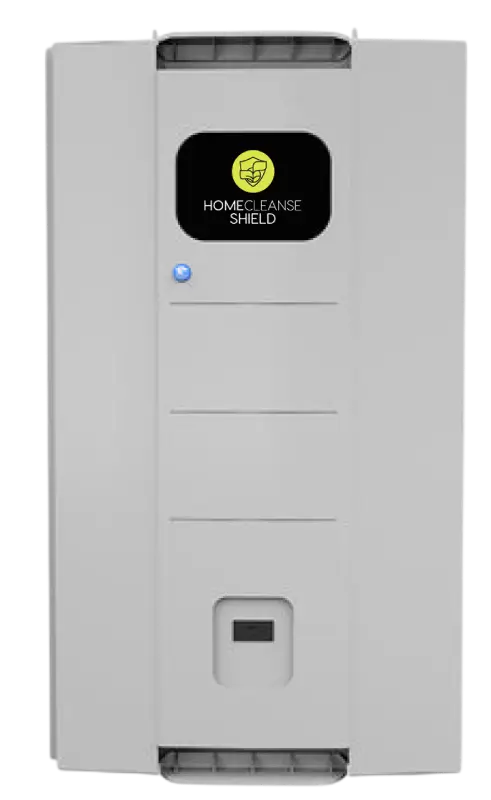
HomeCleanse Shield is a whole-home air-cleaning system installed within the HVAC system, allowing air to be filtered as it circulates throughout the entire home.
Whole-home filtration can be particularly useful because particulate matter isn’t limited to one room. Air and particles move throughout connected indoor spaces, especially when HVAC systems are operating.
Filtration doesn’t replace fixing an active source of pollution or contamination, but it can play an important role in reducing particles that are already circulating through the air.
Maintain: Build a Cleaner Indoor Environment
Monitoring and filtration work best when they’re part of a larger routine.
That means managing moisture, maintaining HVAC equipment, controlling particle sources, cleaning accumulated dust, watching outdoor conditions, and investigating unusual changes instead of waiting until an indoor environmental problem becomes obvious.
The goal isn’t a perfectly particle-free house.
That doesn’t exist.
The goal is to understand what’s happening in your environment and continually reduce unnecessary exposure where you can.
Your Air Is Always Telling a Story
PM2.5 is useful because it makes part of the invisible indoor environment measurable.
But the number isn’t the entire story.
It doesn’t tell you exactly what every particle is. It doesn’t diagnose mold. And it doesn’t tell you why particulate matter increased.
What it can do is show you when your environment changes.
Combine that information with source control, appropriate ventilation, effective filtration, thorough cleaning, and a little environmental detective work, and you can begin making decisions based on what’s actually happening inside your home.
Because creating a healthier indoor environment isn’t about achieving perfect air.
It’s about understanding your home well enough to know when something changes and what to do next.

PM2.5 FAQs
Is PM2.5 the same thing as dust?
Not exactly. Some dust particles may fall within the PM2.5 size range, but “dust” can contain particles of many different sizes and compositions. PM2.5 specifically refers to fine particulate matter measuring 2.5 micrometers or smaller.
Can you see PM2.5?
Individual PM2.5 particles are too small to see with the naked eye. Large concentrations of particulate matter may contribute to visible haze or smoke, but you cannot judge PM2.5 exposure simply by looking at the air.
Can cooking cause high PM2.5?
Yes. Cooking can be a significant source of indoor particulate matter. Frying, grilling, sautéing, baking, high-temperature cooking, and burning food can all increase indoor PM.
Do candles create PM2.5?
Burning candles can generate particulate matter. How much is produced can vary based on the candle, wick, combustion conditions, ventilation, and other factors.
Can an air purifier remove PM2.5?
Air purifiers designed to capture fine particles can reduce airborne PM2.5. Performance depends on factors including filtration efficiency, airflow, room size, placement, operating time, and how quickly particles are being generated or entering the space.
Does a HEPA filter remove PM2.5?
Yes. HEPA filters are designed to capture particles within the PM2.5 size range. True HEPA filters can capture at least 99.97% of particles at 0.3 micrometers, with even greater efficiency for particles larger or smaller than that most-penetrating size.
Should I open my windows if PM2.5 is high?
It depends on outdoor conditions. If the PM2.5 source is indoors and outdoor air is clean, ventilation may help dilute or remove indoor pollutants. If outdoor air quality is poor, opening windows can bring additional particulate matter into the home.
Check outdoor air quality before deciding.
Can PM2.5 come from mold?
Mold spores and other biological material can contribute to indoor particulate matter, but not every mold-related particle will necessarily fall within the PM2.5 size fraction. More importantly, a PM2.5 reading cannot identify whether the particles detected are mold.
Can a PM2.5 monitor detect mold?
No. A PM2.5 monitor measures or estimates the concentration of particles within a particular size range. It does not determine the biological or chemical identity of those particles.
If you’re concerned about mold, use an investigation and testing strategy specifically designed for mold.
Why is my PM2.5 high at night?
There are many possibilities. Evening cooking, fireplaces, candles, outdoor pollution, changes in ventilation, or other household activities may contribute.
Look for patterns in your readings rather than assuming one cause.
What should I do if my PM2.5 is high?
Start by looking for the source.
Consider what was happening when the reading increased, check outdoor air quality, reduce or stop obvious particle-generating activities, use appropriate ventilation when outdoor conditions allow, and run effective air filtration.
If levels remain unusually elevated without an identifiable explanation, investigate further.
Citations:
U.S. Environmental Protection Agency. “Sources of Indoor Particulate Matter (PM).” https://www.epa.gov/indoor-air-quality-iaq/sources-indoor-particulate-matter-pm
U.S. Environmental Protection Agency. “Indoor Particulate Matter.” https://www.epa.gov/indoor-air-quality-iaq/indoor-particulate-matter
U.S. Environmental Protection Agency. “Guide to Air Cleaners in the Home.” https://www.epa.gov/indoor-air-quality-iaq/guide-air-cleaners-home
U.S. Environmental Protection Agency. “What is a MERV rating?” https://www.epa.gov/indoor-air-quality-iaq/what-merv-rating
U.S. Environmental Protection Agency. “What is a HEPA filter?” https://www.epa.gov/indoor-air-quality-iaq/what-hepa-filter
U.S. Environmental Protection Agency. “Timeline of Particulate Matter (PM) National Ambient Air Quality Standards (NAAQS).” https://www.epa.gov/pm-pollution/timeline-particulate-matter-pm-national-ambient-air-quality-standards-naaqs
World Health Organization. “WHO Global Air Quality Guidelines: Particulate Matter (PM2.5 and PM10), Ozone, Nitrogen Dioxide, Sulfur Dioxide and Carbon Monoxide.” 2021. https://www.who.int/publications/i/item/9789240034228
Centers for Disease Control and Prevention. “Air Pollutants.” https://www.cdc.gov/air-quality/pollutants/index.html
Singer BC, Delp WW. “Response of consumer and research grade indoor air quality monitors to residential sources of fine particles.” Indoor Air. 2018;28:624–639. https://doi.org/10.1111/ina.12463
Singer BC, et al. “Performance of low-cost indoor air quality monitors for PM2.5 and PM10 from residential sources.” Building and Environment. 2020;171:106654. https://doi.org/10.1016/j.buildenv.2020.106654
Must-Have Indoor Air Quality Tools
-

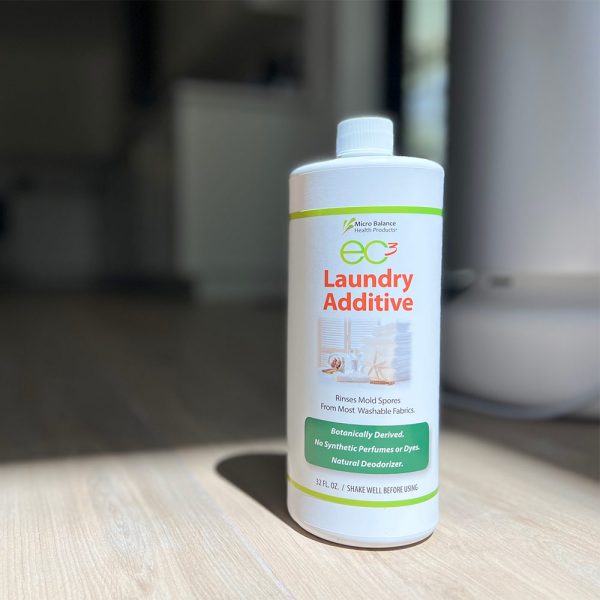
EC3 Laundry Additive
Add EC3 to every rinse cycle to rinse away mold, bacteria and musty odors from...
-
$23.00 Shop Now -

HomeCleanse Shield
Turn your HVAC into the healthiest feature of your home.
-
$2,495.00 Shop Now -
HomeCleanse Cleaning
Take your cleaning to the next level buying all the tools we use to keep...
-
Price range: $299.00 through $549.00 Shop Now -
Mold & Bacteria Contents Cleaning
Remove harmful pollutants that accumulate in the dust of your home. (Options available for renters...
-
Price range: $99.00 through $349.00 Shop Now -

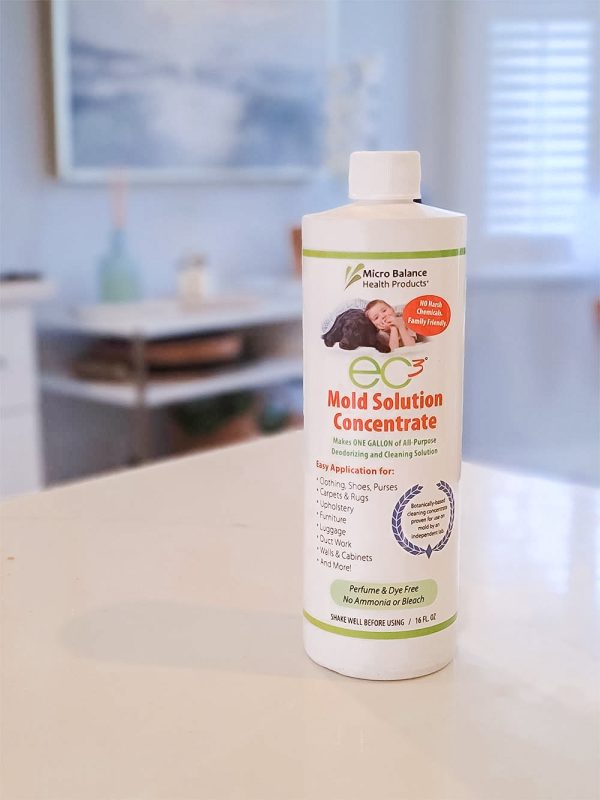
EC3 Mold Solution Concentrate
Micro Balance EC3 Mold Solution Concentrate is a natural botanical that removes mold spores, bacteria,...
-
$33.00 Shop Now -

The Dust Test
Optimizing Air Quality starts with finding what’s not optimal. *Detects 36 different species of mold...
-
$299.00 Shop Now -
EuroClean 4 Gallon Hepa Vacuum
The Euroclean GD930HSP is a 4 Gallon Dry HEPA Vacuum that meets the EPA's standards...
-
$849.00 Shop Now