If you’re worried about mold hiding somewhere in your home, you may have come across a tool called a mold meter.
Maybe there’s a suspicious stain near a baseboard. Maybe the cabinet under your kitchen sink smells a little musty. Or maybe you had a leak months ago, everything looks dry now, and you’re wondering what could be happening inside the wall.
So you buy a mold meter, press it against the wall, and it gives you a number. Now what?
Here’s the most important thing to understand:
Most devices marketed as “mold meters” do not actually detect mold. They detect moisture.
That can still be incredibly useful! Moisture is one of the most important clues when investigating a potential mold problem. But a moisture reading alone cannot tell you whether mold is present, what type of mold may be growing, or how extensive contamination might be.
Let’s break down what these tools actually do, what those numbers mean, and how to use that information without letting one reading send you into a panic.
What Is a Mold Meter?
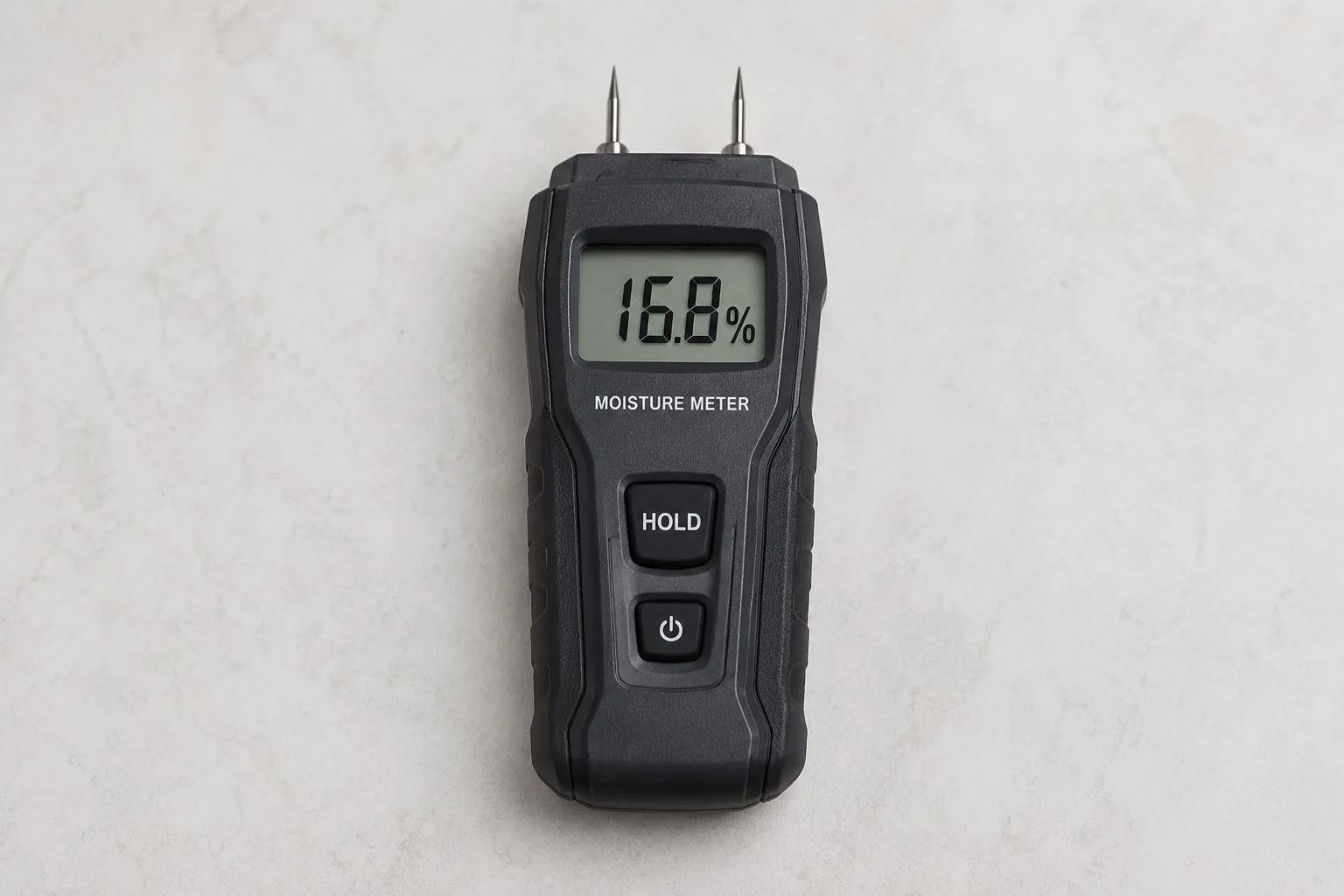
A “mold meter” is generally another name used for a moisture meter. A moisture meter measures moisture in or around building materials such as drywall, wood, flooring, ceilings, cabinets, subfloors, and other materials depending on the device.
The meter is looking for water or elevated moisture, not mold itself. That distinction matters.
Think about finding a wet spot on the floor next to your refrigerator. The wet floor tells you something is happening. Maybe the refrigerator line is leaking. Maybe someone spilled a glass of water. Maybe condensation is collecting somewhere it shouldn’t.
But the puddle itself doesn’t tell you whether mold is growing underneath the flooring.
A moisture meter works in a similar way. It gives you a clue about the conditions in the area, not a mold diagnosis.
Can a Mold Meter Detect Mold?
No. A moisture meter cannot directly detect mold.
It can help identify areas where excess moisture may be present, and those areas may deserve further investigation for mold because mold requires moisture to grow.
The U.S. Environmental Protection Agency describes moisture control as the key to mold control and recommends addressing wet or damp materials quickly. When materials can be dried within roughly 24 to 48 hours after becoming wet, mold growth might be prevented.
So, if your moisture meter identifies an unexpectedly damp section of drywall, that matters. But it does not automatically mean, “There is mold inside this wall.”
A more accurate interpretation would be: “Something may be causing this area to contain more moisture than expected, and I should figure out why.”

Why Moisture Matters So Much When Looking for Mold
Mold spores naturally exist in the environment. The bigger problem begins when indoor conditions allow those spores to start growing, and one of the most important ingredients is moisture.
Sometimes the source is obvious, such as a flood, burst pipe, roof leak, or major plumbing failure. But moisture problems can also be surprisingly quiet.
A tiny leak underneath a sink can slowly affect the cabinet and surrounding materials. Condensation can repeatedly collect around a windowsill. An HVAC condensate issue can keep nearby materials damp. A slow refrigerator supply-line leak can affect flooring before anyone realizes what’s happening.
High indoor humidity, poorly ventilated bathrooms, basement or crawlspace moisture, and water entering around doors or windows can create problems as well.
These smaller issues are part of what makes hidden mold so frustrating. You don’t necessarily walk downstairs one morning and find three inches of water. Sometimes the first clue is a baseboard that looks slightly discolored, a cabinet that smells strange, paint that suddenly starts bubbling, or a room that always seems a little more humid than the rest of the house.
That is where moisture detection can become useful.
A Real-Life Example: The Mystery Spot by the Baseboard
Imagine you notice a brownish spot near the baseboard in your bedroom. You touch it with a gloved hand, and it feels dry. There hasn’t been a major leak that you know of.
So what is it? An old stain? Dirt? Water damage? Mold?
A moisture meter could help you gather another piece of information. You might take a reading directly over the suspicious area, several inches above it, along the surrounding wall, and on another apparently dry section of similar wall for comparison.
If the suspicious area consistently shows elevated moisture compared with similar areas nearby, you now have a reason to investigate further. Maybe there is a plumbing line behind the wall. Maybe rainwater is entering around a nearby window. Maybe condensation is occurring inside the wall cavity.
But what if the reading is normal?
That still doesn’t prove the area is mold-free. The material could have gotten wet months ago and dried since then while contamination remained behind.
A moisture meter tells you about moisture conditions now. It cannot reconstruct the entire history of that wall.
That distinction is one homeowners frequently miss.

Why Moisture Meter Readings Can Be So Confusing
Spend a few minutes reading homeowner forums, and you’ll quickly see how confusing moisture-meter readings can become.
Homeowners report taking readings around suspicious baseboards and wondering whether the number confirms mold. Others get drastically different measurements depending on where or how the device is used. Some find high readings around tiled showers, only to discover similarly high readings on other tiled areas and wonder whether they’re actually measuring a problem or simply seeing the way that particular meter responds to that material.
These aren’t unusual situations. They highlight an important lesson:
The number on the screen only means something when you understand what is being measured, what material you’re measuring, what type of meter you’re using, and what you’re comparing the result against.
What Moisture Meter Reading Means Mold?
This is one of the biggest questions people have about mold meters, and unfortunately, there isn’t one universal number.
Different materials behave differently. Drywall is different from wood. Wood is different from concrete. Concrete is different from tile. Meters can also use different technologies, scales, and calibration systems.
Scientific reviews of building dampness have noted that there is no single generally accepted measurement for defining a dampness problem across every building and circumstance. That means a reading should not be interpreted in isolation.
Instead of only asking, “Is 18% bad?” it can be more useful to ask, “Why is this section of material reading differently from comparable areas around it?”
Imagine most of a bedroom wall produces similar readings. Then you reach the bottom corner underneath a window, and the readings suddenly jump. That pattern may be more informative than obsessing over one number because it gives you somewhere to start investigating.
Pin vs. Pinless Moisture Meters
There are two common types of moisture meters homeowners may encounter.
Pin-Type Moisture Meters
Pin meters have small metal probes that penetrate the material. The meter measures electrical resistance between those pins, which changes depending on the moisture within the material.
They can be useful for taking targeted readings, particularly in compatible materials such as wood and drywall. The downside is fairly obvious: you’re sticking pins into the surface.
Pinless Moisture Meters
Pinless meters sit against the surface and scan for moisture without puncturing it, making them useful for quickly scanning a larger area.
For example, you might move a pinless meter across a section of drywall underneath a window and notice readings increasing as you approach one corner. That can help narrow down the area that deserves closer investigation.
However, pinless meters can also be affected by the material underneath the surface and other conditions. They should not be treated like an X-ray machine that can perfectly tell you what is happening inside a wall.
Some professional tools combine both methods.

Can a Mold Meter Find Mold Behind Walls?
Not directly. A moisture meter may help identify moisture associated with a hidden problem, but it cannot look through drywall and identify mold growing behind it.
Imagine a pipe has been slowly leaking inside a wall. The front of the drywall looks completely normal, but a moisture meter identifies an unusual pattern. That could give an inspector a reason to investigate that wall cavity further.
Now imagine that same pipe leaked six months ago. The leak stopped, the drywall dried, but mold developed on the back of the drywall while it was wet. Today, your moisture meter could potentially show a normal reading because the material is no longer wet.
The mold doesn’t magically disappear just because the moisture did.
That is why moisture meters are valuable investigative tools, but they are not mold tests.
What Else Should You Look for Alongside Moisture Readings?
If you’re investigating a possible mold problem, zoom out. Don’t make your decision based on one device.
Visible Changes
Look for water stains, discoloration, bubbling paint, peeling wallpaper, warped flooring, swollen baseboards, damaged drywall, and visible microbial growth.
The important question isn’t simply, “Do I see mold?” Look for evidence that water has affected the material at some point.
Odors
A persistent musty or earthy smell can indicate a moisture or microbial issue even when you cannot see the source.
The CDC’s National Institute for Occupational Safety and Health notes that thorough visual inspections and detecting musty odors can be more reliable for identifying dampness and mold problems than relying on short-term air sampling alone.
Moisture History
Ask yourself: Has anything happened here before?
Maybe the dishwasher leaked two years ago. Maybe the upstairs bathroom overflowed. Maybe that window leaked before it was replaced. Maybe the basement flooded before you bought the house.
A moisture meter measures the present. Your home’s history can provide clues the meter cannot.
Indoor Humidity
Humidity is another important piece of the puzzle. The EPA recommends keeping indoor relative humidity below 60%, ideally between 30% and 50%.
A hygrometer measures moisture in the air, while a moisture meter measures moisture associated with a material. Both can be useful when trying to understand why an area of your home keeps getting damp.
Environmental Testing
If you’ve already had mold testing performed, those results can be another piece of the puzzle. Depending on the situation, testing may involve dust, air, surface, or other types of samples, and each method provides different information about the environment.
The key is not to let one test result stand alone. For example, an air sample captures what was airborne in a particular location during a particular window of time, while dust testing can provide information about mold that has accumulated in the environment over time. Testing results are most useful when considered alongside moisture readings, visible conditions, odors, water-damage history, and a thorough inspection of the home.
Persistent or Unexplained Symptoms
Sometimes the house isn’t the first place someone notices that something may be wrong. They notice that they don’t feel well.
Exposure to damp and moldy environments triggers a multisystemic reaction, so symptoms can span the entire body. That beind said, everyone responds differently, and certain individuals may be at greater risk from exposure.
Symptoms alone cannot tell you that mold is the cause. Many symptoms associated with mold exposure can also have other explanations, which is why it’s important to work with a qualified healthcare provider when you’re feeling unwell.
However, unexplained or persistent symptoms can be another reason to take a closer look at your surroundings, particularly if you also have signs of a potential environmental problem. For example, maybe you notice that you consistently feel worse after spending time in one room, your symptoms began after a major water-damage event, or multiple people in the home began experiencing new symptoms around the same period.
None of those patterns prove that mold is responsible. But combined with moisture, musty odors, visible water damage, or other environmental clues, they may be worth investigating.

What Does a Professional Mold Inspector Do Differently?
This is where a professional inspection becomes very different from walking around your house with a moisture meter.
A qualified mold inspector isn’t looking for one magical reading. They’re putting together evidence.
Depending on the property and situation, a comprehensive investigation may include a detailed visual inspection, moisture mapping, moisture meter readings, humidity measurements, thermal imaging, HVAC evaluation, building-envelope evaluation, investigation of previous water-damage areas, targeted environmental sampling when appropriate, and wall-cavity investigation when hidden contamination is suspected.
Think of it as detective work. A moisture meter might find the footprint, but it doesn’t identify who left it, when they were there, or what happened. The rest of the investigation helps fill in that story.
What Should You Do If Your Mold Meter Finds Moisture?
Finding an elevated reading doesn’t automatically mean you have a mold problem. Instead, use the result as a reason to investigate.
1. Compare the Reading
Take readings from nearby areas and similar materials. Is one location noticeably different? Does the reading change as you move closer to a window, plumbing fixture, exterior wall, or HVAC component?
You’re looking for a pattern rather than relying on a single number.
2. Look for the Moisture Source
Check nearby plumbing, windows, doors, roofing, appliances, HVAC components, bathrooms, exterior drainage, basements, and crawlspaces.
The goal isn’t simply to dry the material. You need to understand why it became wet so that the underlying problem can be corrected.
3. Consider How Long It May Have Been Wet
Time matters. Both the EPA and CDC recommend addressing wet materials quickly, generally within 24 to 48 hours, because prolonged moisture increases the opportunity for microbial growth.
A washing machine hose that leaked 20 minutes ago is a very different situation from a slow pipe leak that may have gone unnoticed for six months.
4. Investigate Further When Necessary
Persistent elevated moisture, a known history of water damage, musty odors, visible suspected mold, repeated leaks, unexplained staining, or suspicion of contamination behind walls or flooring may warrant a professional inspection.
The EPA specifically notes that hidden mold investigations can be difficult and recommends considering an experienced professional when hidden growth is suspected.

What If the Mold Meter Says Everything Is Dry but You Still Suspect Mold?
This is one of the most important limitations of these devices.
A normal moisture reading does not necessarily rule out mold.
Remember the old-leak example. If something became wet months ago, mold could have developed while moisture was present and remained after the material dried. Contamination may also exist somewhere your meter isn’t effectively measuring.
If you still have reasons to suspect an issue, such as a history of water damage, persistent musty odors, or unexplained visible changes, further investigation may still be appropriate.
This is why HomeCleanse does not recommend relying on a single data point to fully understand what’s happening inside a home.
Can You Test Your Home for Mold Yourself?
If you’re trying to answer the broader question, “Is mold actually present in my home?”, you need a tool designed to detect mold rather than moisture.
One option is dust testing.
As particles move through your home’s air, they eventually settle into dust. Analyzing that dust can provide information about mold that has accumulated in the environment over time.
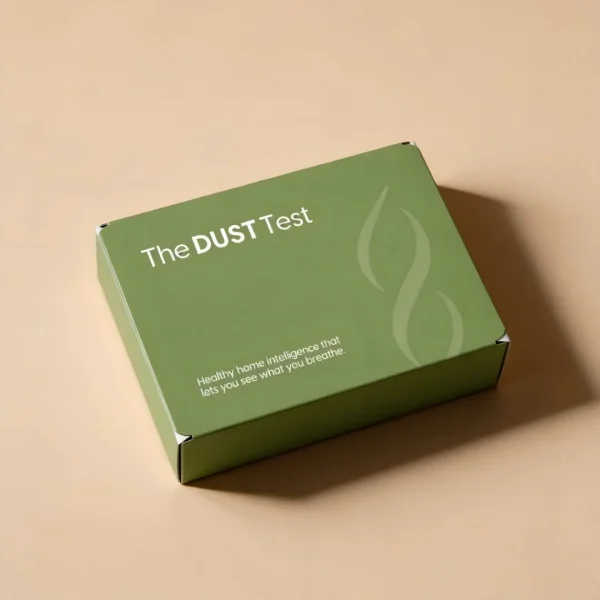
The Dust Test uses PCR-based laboratory analysis to screen household dust for 36 mold species commonly evaluated in indoor environments. This can be particularly helpful if you suspect a problem but don’t know where to begin, don’t see obvious mold, want environmental data before deciding whether to hire an inspector, or have already received conflicting information.
The easiest way to understand the difference is to look at the question each option helps answer:
A moisture meter asks, “Is this material wet?”
A dust test asks, “What mold is showing up in my environment?”
A professional inspection asks, “Where is the problem coming from, how extensive is it, and what needs to happen next?”
Those are three different questions, and understanding the difference can save homeowners a lot of confusion.
Moisture Meter vs. Mold Test vs. Mold Inspection
Tool | What It Tells You | What It Cannot Tell You |
Moisture meter | Whether moisture may be elevated in a material | Whether mold is definitely present |
Hygrometer | Relative humidity in the air | Whether mold is growing inside a wall |
Dust mold test | Which targeted mold species are detected in collected household dust | Exactly where the source is located |
Professional inspection | Where moisture and potential contamination may be coming from and how extensive the problem may be | Results depend heavily on the quality and thoroughness of the inspector |
Each tool answers a different part of the puzzle.
So, Should You Buy a Mold Meter?
A moisture meter can absolutely be useful to have around the house. It may help you investigate suspicious areas, monitor materials after a leak, compare different areas, or catch moisture problems before they become larger issues.
But buy it for what it actually does.
You’re buying a moisture-detection tool, not a handheld mold scanner.
If your goal is preventing mold, moisture monitoring can be an excellent part of that strategy. If your goal is determining whether mold is already present, you’ll need additional information.
When You Don’t Know What Your Next Step Should Be
Sometimes the hardest part isn’t finding information. It’s figuring out which information actually applies to your house.
Maybe your moisture meter found something strange. Maybe your meter found nothing, but you still smell something musty. Maybe you’ve already tested and don’t understand your results. Or maybe you’ve had three people tell you three completely different things.
You don’t necessarily need to jump straight into remediation. You need to figure out the right next step.
A HomeCleanse Wellness Advisor can help you talk through what you’ve found, what information you already have, and what may make sense to investigate next.
Because when it comes to mold, the goal shouldn’t be collecting as many tests, gadgets, and numbers as possible.
The goal is understanding what’s actually happening in your home well enough to do something useful about it.

Frequently Asked Questions About Mold Meters
Is there a device that detects mold?
There is no simple handheld “mold meter” that you can point at a wall to confirm whether mold is growing behind it. Devices marketed as mold meters are typically moisture meters. Mold can be identified through visual investigation and various laboratory sampling methods when testing is appropriate.
What does a mold meter detect?
A mold meter typically detects moisture or changes associated with moisture in building materials. It does not directly detect mold spores or identify mold species.
Can a moisture meter tell if there is mold behind drywall?
No. It may detect elevated moisture that suggests an area deserves further investigation, but it cannot confirm mold behind drywall.
Does a high moisture reading mean mold?
Not necessarily. A high reading indicates possible moisture, and persistent moisture can create conditions that support mold growth. The reading must be interpreted based on the material, meter, surrounding readings, moisture history, and other evidence.
Can mold exist even if a moisture meter says the wall is dry?
Yes. Mold may have developed during an earlier moisture event and remained after the material dried. A dry reading today cannot tell you whether the material was wet in the past.
Are pin or pinless moisture meters better for finding mold?
Neither detects mold directly. Pinless meters can be useful for quickly scanning larger areas, while pin meters can provide more targeted moisture measurements in compatible materials. Professionals may use both depending on the situation.
What should I do if I think mold is behind my wall?
Avoid unnecessarily disturbing a suspected contaminated area. Look for signs of moisture, water damage, odors, and other clues, and consider hiring a qualified mold inspector who uses moisture detection and other building-diagnostic tools to investigate hidden sources.
Is a moisture meter enough to check a house for mold?
No. A moisture meter is one investigative tool. A thorough mold assessment may incorporate visual inspection, moisture mapping, humidity measurements, thermal imaging, building diagnostics, targeted sampling, and investigation of previous water damage.
Citations:
- Lstiburek, J., Brennan, T., & Yost, N. (2002, January 15). Rr-0208: What you need to know about mold. Building Science Corporation. Retrieved from, https://www.buildingscience.com/documents/reports/rr-0208-what-you-need-to-know-about-mold/view.
- Environmental Protection Agency. (n.d.). Mold. EPA. Retrieved from https://www.epa.gov/mold.
- Centers for Disease Control and Prevention. Basic facts about mold and dampness. Centers for Disease Control and Prevention. Retrieved from https://www.cdc.gov/mold/faqs.htm.
- World Health Organization. (n.d.). Mycotoxins. World Health Organization. Retrieved from https://www.who.int/news-room/fact-sheets/detail/mycotoxins.
- EPA. (n.d.). Health and Environmental Effects of Particulate Matter (PM). EPA. Retrieved from https://www.epa.gov/pm-pollution/health-and-environmental-effects-particulate-matter-pm.
- Nchh. (n.d.). Mold. NCHH. Retrieved from https://nchh.org/information-and-evidence/learn-about-healthy-housing/health-hazards-prevention-and-solutions/mold/
- Environmental and Occupational Health Assessment Program, & Environmental and Occupational Health Assessment Program, & Health Science Section, Mold Basics for Primary Care Clinicians (2009). Hartford, CT; Connecticut Department of Public Health. , H. S. S., Mold Basics for Primary Care Clinicians 1–10 (2009). Hartford, CT; Connecticut Department of Public Health.
- Curtis, L., Lieberman, A., Stark, M., Rea, W., & Vetter, M. (2004). Adverse health effects of indoor molds. Journal of Nutritional & Environmental Medicine, 14(3), 261-274.
- Bush, R. K., Portnoy, J. M., Saxon, A., Terr, A. I., & Wood, R. A. (2006). The medical effects of mold exposure. Journal of Allergy and Clinical Immunology, 117(2), 326-333
- Fisk, W. J., Lei-Gomez, Q., & Mendell, M. J. (2007). Meta-analyses of the associations of respiratory health effects with dampness and mold in homes. Indoor air, 17(4), 284-296.
- Wild, C. P., & Gong, Y. Y. (2010). Mycotoxins and human disease: a largely ignored global health issue. Carcinogenesis, 31(1), 71-82.
- Bennett JW, Klich M. Mycotoxins. Clin Microbiol Rev. 2003 Jul;16(3):497-516. doi: 10.1128/CMR.16.3.497-516.2003. PMID: 12857779; PMCID: PMC164220.
- https://www.epa.gov/mold/mold-testing-or-sampling
- https://www.cdc.gov/niosh/mold/testing-remediation/index.html
- https://www.who.int/publications/i/item/9789289041683
- https://www.epa.gov/mold/publications-about-mold
Must-Have Indoor Air Quality Tools
-

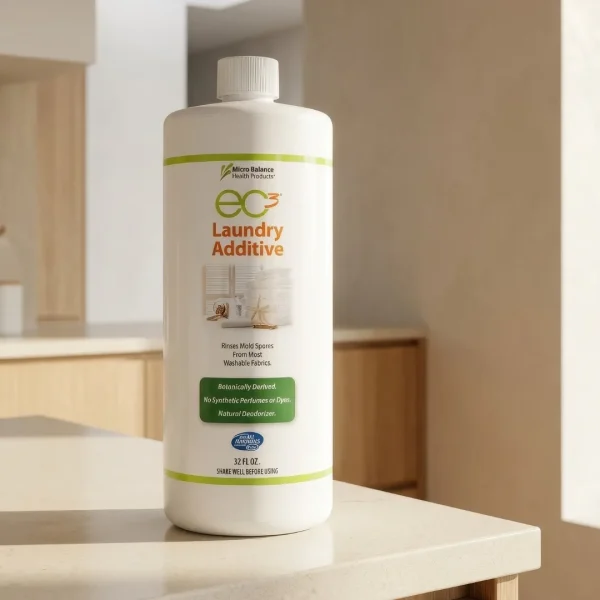
EC3 Laundry Additive
Add EC3 to every rinse cycle to rinse away mold, bacteria and musty odors from...
-
$23.00 Shop Now -
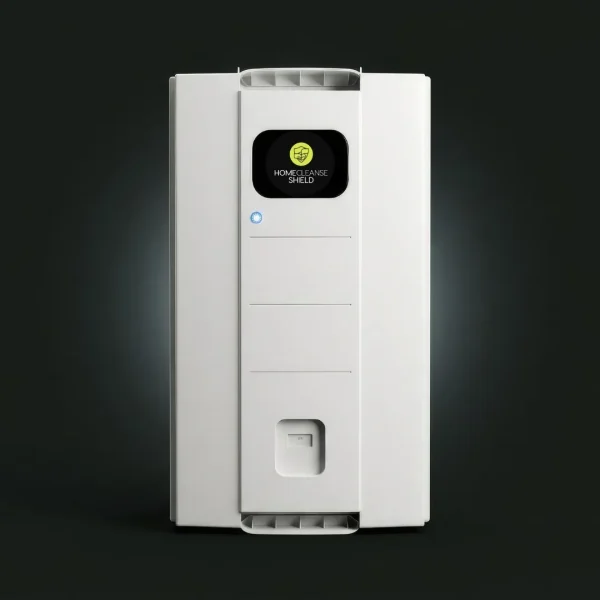
HomeCleanse Shield
Turn your HVAC into the healthiest feature of your home.
-
$2,495.00 Shop Now -
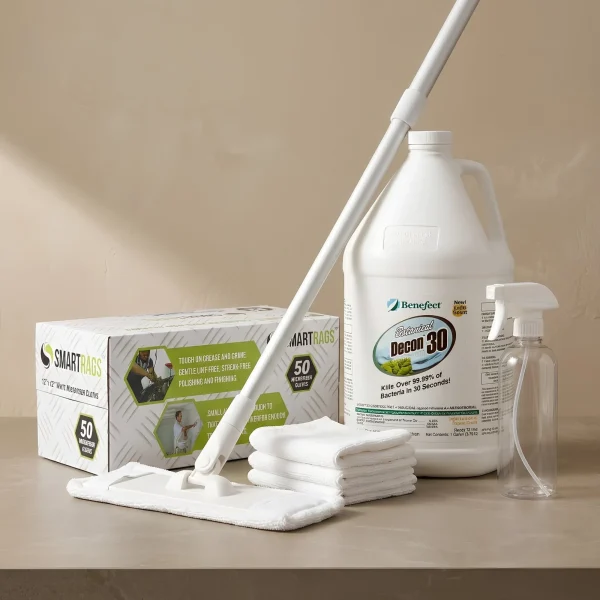
HomeCleanse Cleaning
Take your cleaning to the next level buying all the tools we use to keep...
-
Price range: $299.00 through $549.00 Shop Now -
Mold & Bacteria Contents Cleaning
Remove harmful pollutants that accumulate in the dust of your home. (Options available for renters...
-
Price range: $99.00 through $349.00 Shop Now -
EC3 Mold Solution Concentrate
Micro Balance EC3 Mold Solution Concentrate is a natural botanical that removes mold spores, bacteria,...
-
$33.00 Shop Now -
The Dust Test
Optimizing Air Quality starts with finding what’s not optimal. *Detects 36 different species of mold...
-
$299.00 Shop Now -
EuroClean 4 Gallon Hepa Vacuum
The Euroclean GD930HSP is a 4 Gallon Dry HEPA Vacuum that meets the EPA's standards...
-
$849.00 Shop Now