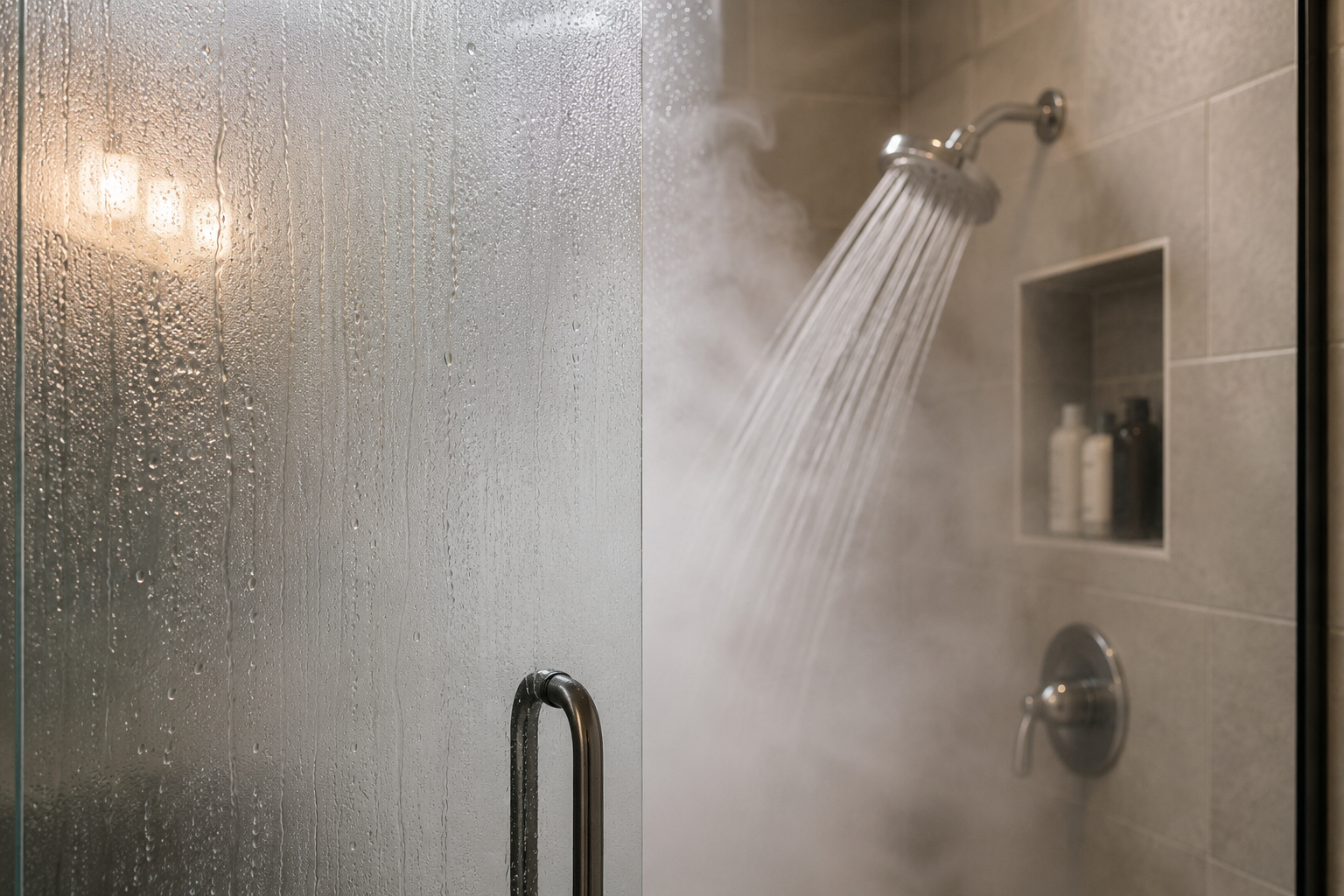
You take a hot shower. The bathroom fills with steam. You flip on the exhaust fan, and eventually the mirror clears.
That means the fan did its job, right?
Not necessarily.
A bathroom exhaust fan is one of the simplest tools in your home for managing moisture, but simply hearing it run does not mean it is removing enough humid air from the room.
The fan could be too small for the space. Dust and debris could be restricting airflow. The ductwork could be poorly installed or damaged. You might be turning the fan off too soon. In some homes, the fan may even be moving humid air out of the bathroom only to dump it somewhere else inside the house.
That matters because bathrooms regularly experience some of the highest moisture levels in a home. When that moisture is not properly managed, repeated condensation and dampness can create conditions that allow mold to grow.
So, how can you tell whether your bathroom fan is actually doing what you think it is?
What Is a Bathroom Exhaust Fan Supposed to Do?
The primary job of a bathroom exhaust fan is fairly simple: remove moisture-laden air from the bathroom and exhaust it outside the home.
Every shower adds water vapor to the air. You can often see some of it as condensation forms on the mirror, walls, windows, or other cool surfaces.
Without adequate ventilation, that moisture can linger in the bathroom or settle onto building materials.
Bathrooms are particularly susceptible because moisture can repeatedly collect on:
Ceilings and walls
Grout and caulk
Window frames
Cabinets and vanities
Drywall
Flooring
Areas around tubs and showers
One steamy shower does not automatically mean you have a mold problem. The bigger concern is repeated or persistent moisture that materials do not have an opportunity to dry from.
That is where good ventilation becomes important.
Your Mirror Cleared. Is the Bathroom Dry?
This is one of the easiest mistakes to make.
You walk into the bathroom after a shower and the mirror is clear again, so the room looks dry.
But a clear mirror does not tell you what is happening everywhere else in the room.
Moisture may still be present on walls, ceilings, grout, windows, or other materials. The relative humidity in the room may also remain elevated after visible steam disappears.
Instead of using the mirror as your only moisture gauge, pay attention to how the entire bathroom behaves after a shower.
Do surfaces stay damp for long periods? Does the bathroom still feel humid? Is condensation collecting on walls or windows? Are you beginning to see peeling paint, staining, or other signs of repeated moisture?
Those clues can tell you much more about whether the room is drying properly.
7 Signs Your Bathroom Fan May Not Be Doing Its Job
A fan making noise only tells you that something is running. It does not necessarily tell you how well the bathroom is being ventilated.
Here are a few things to watch for.
1. Humidity Stays High Long After You Shower
A bathroom will naturally become more humid during a hot shower.
The question is what happens afterward.
Once the shower stops, adequate ventilation should help the room begin moving back toward its normal humidity level. If the bathroom remains noticeably humid for a long period, the fan may not be moving enough air.
A small digital hygrometer can make this much easier to track.
Check the relative humidity before your shower, see how much it rises during or immediately afterward, and then watch what happens once the shower ends.
The goal is not to obsess over every percentage point. You are looking for a pattern.
Does the humidity begin falling again, or does the bathroom stay elevated for an extended period?
2. Condensation Lingers on Surfaces
Fog on the mirror is obvious.
Moisture elsewhere can be easier to overlook.
After showering, look at the:
Ceiling
Walls
Windows
Grout
Fixtures
Areas around the shower or tub
If water droplets remain on these surfaces for extended periods, the room may not be drying effectively.
Repeated condensation is particularly worth investigating because it means moisture is regularly reaching surfaces throughout the bathroom.
3. Paint Is Peeling or Finishes Are Deteriorating
Your bathroom can leave clues long before you realize there is a ventilation issue.
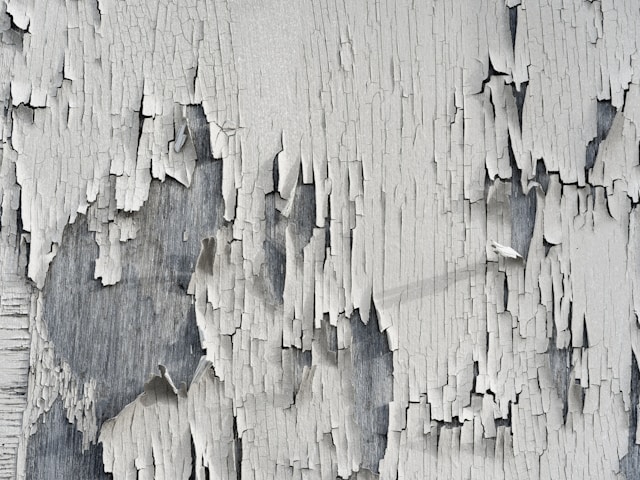
Paint that repeatedly bubbles, cracks, or peels can indicate excess moisture. You may also notice damaged drywall, deteriorating caulk, staining, or other changes to materials.
These signs do not automatically mean mold is present, but they should not be ignored. They can indicate that moisture is affecting materials in the room.
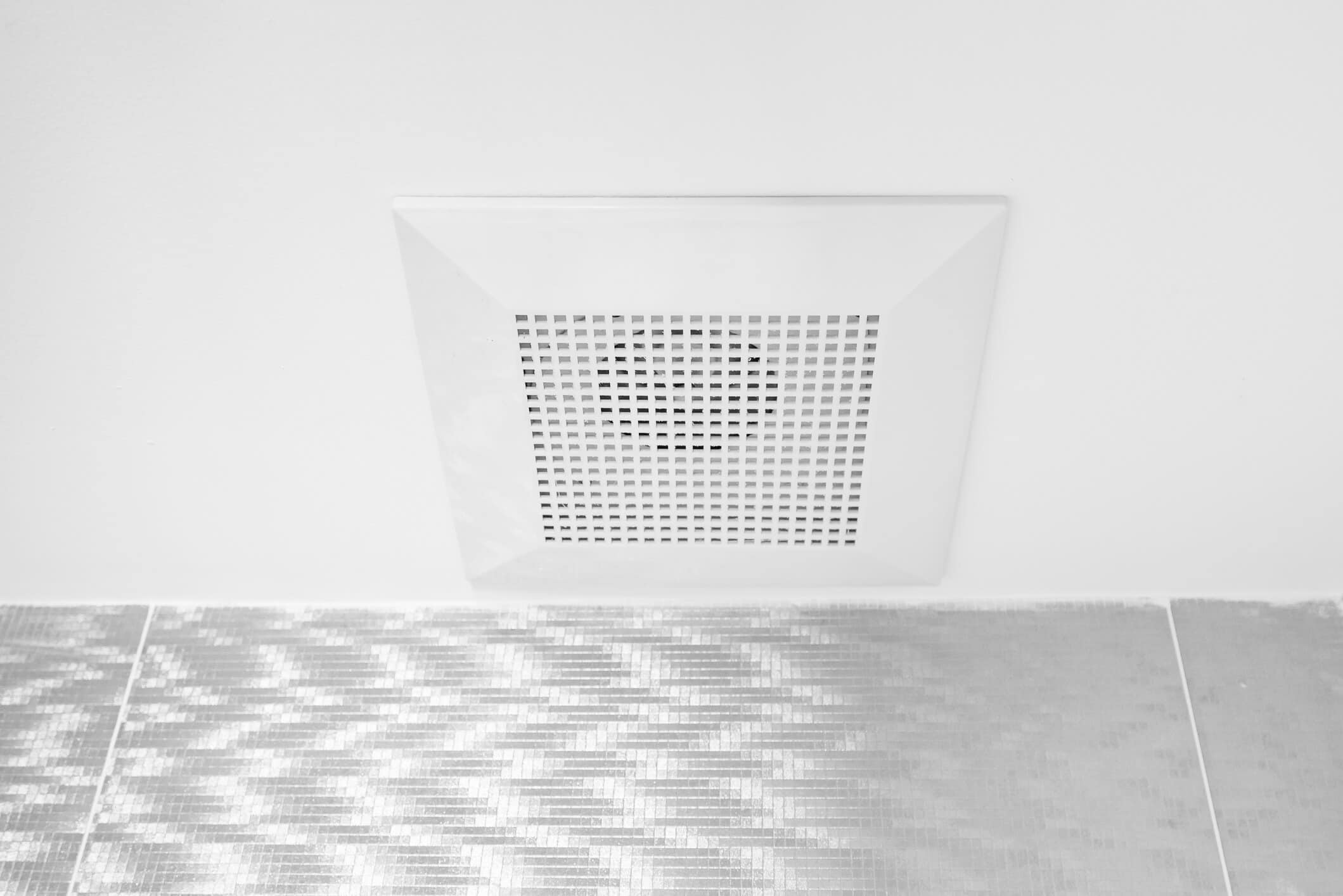
4. The Fan Is Covered in Dust
Take a look up.
When was the last time you cleaned the exhaust fan cover?
If the answer is “I genuinely have no idea,” you are not alone.
Dust and debris can accumulate on the grille and inside the fan over time. That buildup can restrict airflow and reduce how effectively the fan moves air out of the bathroom.
Cleaning the fan should be part of routine home maintenance. Always follow the manufacturer’s instructions and turn off power before cleaning components that require access beyond the exterior grille.
If the fan remains weak, unusually loud, or ineffective after cleaning, it may need to be inspected, repaired, or replaced.
5. The Fan Is Too Small for the Bathroom
Bathroom fans are rated by how much air they can move, typically measured in cubic feet per minute, or CFM.
Think of CFM as the fan’s airflow capacity.
A small powder room and a large primary bathroom with a shower and soaking tub do not have the same ventilation needs. If the fan cannot move enough air for the size and features of the room, humidity may accumulate faster than the fan can remove it.
A common rule of thumb for many bathrooms is approximately 1 CFM per square foot of floor area, although larger bathrooms and rooms with multiple fixtures may require a different calculation.
If you are installing or replacing a fan, make sure it is appropriately sized for the space rather than simply purchasing whichever model fits the existing opening.
6. You’re Turning the Fan Off Too Soon
Turning the exhaust fan off the second you step out of the shower may leave a significant amount of moisture behind.
The shower may be finished, but the bathroom is still drying.
Run the fan while showering and continue running it afterward to help remove lingering humidity. Depending on the room, fan, and amount of moisture generated, this may mean leaving it on for roughly 20 to 30 minutes after the shower.
A timer switch can make this easier. Instead of remembering to come back and turn the fan off, you can set it to continue ventilating after you leave.
Better yet, watch your bathroom’s humidity to understand how long your room typically takes to recover.
7. The Fan Is Exhausting Into the Wrong Place
This is a big one.
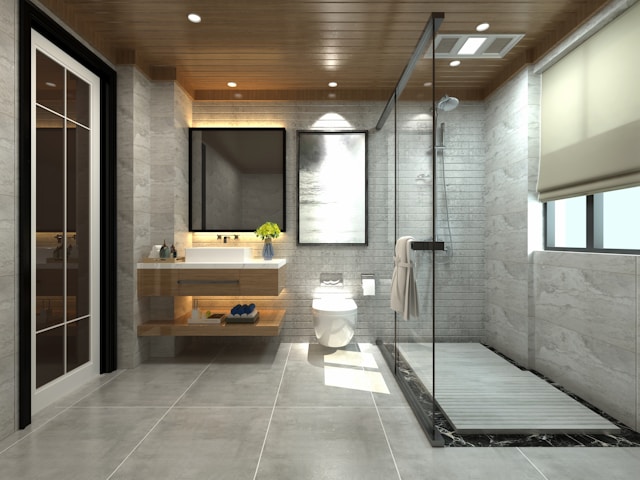
Your bathroom fan should move humid air out of your home, not simply out of your bathroom.
If the exhaust duct terminates in an attic, wall cavity, crawlspace, or another enclosed area, you may simply be relocating the moisture problem.
Imagine taking all of the warm, moisture-filled air from a shower and continuously pumping it into your attic.
When that humid air encounters cooler surfaces, condensation can occur. Now, instead of excess moisture in the bathroom, you may have excess moisture affecting insulation, roof sheathing, framing, or other materials somewhere you rarely look.
Bathroom exhaust should terminate outdoors.
If you do not know where your bathroom fan vents, it is worth finding out.
Want to Go a Step Further?
Good bathroom ventilation is only one piece of moisture control. From shower habits and humidity to leaks, wet surfaces, and routine cleaning, small choices can help reduce the conditions that allow mold to grow.
Want more ways to keep moisture and mold in check?
How Humid Should Your Bathroom Be?
There is no single humidity reading that every bathroom must maintain at every moment.
Relative humidity naturally fluctuates based on weather, climate, HVAC operation, shower temperature, ventilation, and other conditions.
A bathroom’s humidity will also temporarily rise while someone showers. That alone is expected.
For the home overall, the U.S. Environmental Protection Agency recommends keeping indoor relative humidity below 60% and ideally between approximately 35% and 50%.
More important than a brief spike during a shower is whether humidity remains elevated.
If the bathroom climbs during a shower and then steadily returns toward the home’s normal range, that tells a very different story than a bathroom that stays humid for hours.
That is why monitoring trends can be more useful than focusing on a single reading.
An Easy Way to Test Your Bathroom’s Humidity
You do not need sophisticated equipment to start paying attention to moisture.
A basic digital hygrometer measures relative humidity and can help you understand what happens in your bathroom every day.
Try this simple experiment:
Check the humidity before showering. This gives you a baseline.
Check it shortly after the shower. Expect the humidity to rise.
Run the exhaust fan during the shower and afterward.
Watch what happens over the next 20 to 60 minutes.
You are looking for recovery.
If the humidity begins moving back toward the pre-shower level, your ventilation system is helping remove the added moisture.
If it remains substantially elevated, or surfaces remain wet long afterward, it may be worth investigating why.
You can also repeat the experiment on different days. Outdoor humidity, temperature, HVAC use, and shower habits can all influence indoor conditions, so one reading does not tell the entire story.

A Quick Test for Bathroom Fan Airflow
You may have heard of holding a piece of toilet paper or tissue against the exhaust grille.
If the fan can hold the lightweight paper against the grille while running, it tells you the fan is pulling some air.
That’s useful as a quick screening check, but it does not prove that the fan is moving the correct amount of air for the bathroom.
A fan can have suction at the grille and still underperform because of its size, dirty components, restrictive ductwork, improper installation, or other issues.
If moisture problems continue despite using the fan properly, a qualified HVAC or ventilation professional can evaluate actual airflow and the exhaust system.
What If Your Bathroom Doesn’t Have an Exhaust Fan?
Some bathrooms rely on windows or other forms of ventilation instead of a mechanical exhaust fan.
Opening a window may help under the right conditions, but its effectiveness depends heavily on the weather outside. Opening a window when outdoor air is extremely humid may not provide the moisture control you expect.
If your bathroom regularly struggles with humidity or condensation and does not have mechanical ventilation, it may be worth discussing exhaust fan installation with a qualified professional.
A dehumidifier may also help manage persistent humidity in some situations, but it should not be used to ignore an underlying ventilation, leak, or moisture problem.
Why Bathroom Moisture Matters for Mold Prevention
Mold spores naturally exist in indoor and outdoor environments. Completely eliminating mold spores from a home is neither realistic nor the goal.
Moisture control is what matters.
When building materials remain damp, they can provide conditions that allow mold to grow. That is why bathrooms deserve particular attention.
They experience moisture again and again.
A shower today.
Another tonight.
Two tomorrow morning.
If the room dries effectively between those events, that is very different from moisture repeatedly accumulating faster than the bathroom can recover.
Good ventilation helps interrupt that cycle by removing humid air and allowing materials to dry.
Don’t Forget About Other Sources of Bathroom Moisture
If your bathroom stays humid despite having an appropriately sized and properly functioning exhaust fan, do not automatically assume the fan is the entire problem.
Look at the bigger picture.
Persistent moisture can also come from:
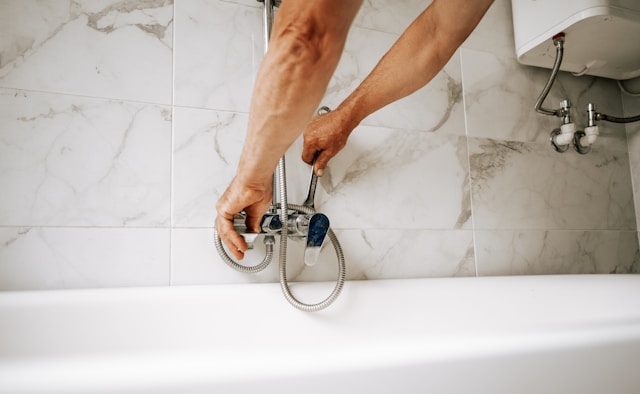
Plumbing leaks
- A leaking toilet
- Failed caulk or grout
- Water escaping a shower or tub
- Roof or window leaks
- Condensation on pipes
- HVAC issues
- Poor insulation
- Water intrusion inside walls or beneath flooring
An exhaust fan can help manage moisture created by normal bathroom activities.
It cannot fix a leak.
If staining, deterioration, musty odors, recurring visible growth, or persistent dampness continues despite proper ventilation, investigate the moisture source rather than simply running the fan longer.
How to Help Keep Your Bathroom Dry
You do not need to turn showering into a building-science experiment.
A few habits can make moisture management much easier:
Run the exhaust fan every time you shower or bathe.
- Continue running it after the shower while the room dries.
- Keep the exhaust fan and grille clean.
- Make sure the fan is appropriately sized for the bathroom.
- Confirm that the exhaust terminates outdoors.
- Monitor relative humidity with a hygrometer.
- Dry persistent condensation rather than allowing surfaces to remain wet.
- Repair leaks and other water problems quickly.
- Pay attention to changes such as peeling paint, staining, musty odors, or recurring dampness.
Most importantly, learn what is normal for your home.
When you know how your bathroom usually behaves, it becomes much easier to notice when something changes.

The Bottom Line
Hearing your bathroom fan turn on does not necessarily mean moisture is being managed properly.
A well-functioning bathroom ventilation system should help remove moisture-laden air, exhaust it outdoors, and allow the bathroom to begin drying after showers and baths.
Instead of judging your fan by how loud it is or how quickly the mirror clears, look at the bigger picture.
Is humidity coming back down?
Are surfaces drying?
Is the air actually being exhausted outside?
Those answers tell you much more about whether your bathroom fan is doing its job.
And when it comes to preventing mold growth, managing moisture before it becomes a persistent problem is one of the most important steps you can take.
What If You Already Have a Mold Problem?
Sometimes, a ventilation issue is discovered after mold growth has already occurred. Fixing the bathroom exhaust problem is an important step, but it does not address existing contamination.
If you’ve discovered mold in your bathroom or suspect an ongoing moisture issue has led to a larger problem, you don’t have to figure out the next steps alone.
Talk to a HomeCleanse Wellness Guide to discuss what’s happening in your home, get answers to your questions, and better understand what your next steps may look like.
Talk to A Wellness Guide
A member of our team is here to help! Click on “Get Started ➤” below to book a consultation with a member of the HOMECLEANSE team. We have a few quick questions that will help us put together a roadmap to solve or prevent all of your mold problems.
Two minutes of your time could lead to better health for you and your family.
- Centers for Disease Control and Prevention. (2020, August 11). Basic facts about mold and dampness. Centers for Disease Control and Prevention. Retrieved September 9, 2021, from https://www.cdc.gov/mold/faqs.htm.
- International Code Council. (2017). Chapter 15: Exhaust Systems. In 2018 IRC: International residential code. essay, International Code Council.
- Environmental Protection Agency. (n.d.). Mold. EPA. Retrieved September 9, 2021, from https://www.epa.gov/mold.
- Lstiburek, J., Brennan, T., & Yost, N. (2002, January 15). Rr-0208: What you need to know about mold. Building Science Corporation. Retrieved September 9, 2021, from https://www.buildingscience.com/documents/reports/rr-0208-what-you-need-to-know-about-mold/view.
- Environmental and Occupational Health Assessment Program, & Environmental and Occupational Health Assessment Program, & Health Science Section, Mold Basics for Primary Care Clinicians (2009). Hartford, CT; Connecticut Department of Public Health. , H. S. S., Mold Basics for Primary Care Clinicians 1–10 (2009). Hartford, CT; Connecticut Department of Public Health.
- Weinhold B. (2007). A spreading concern: inhalational health effects of mold. Environmental health perspectives, 115(6), A300–A305. https://doi.org/10.1289/ehp.115-a300
- WHO. (2018, May 9). Mycotoxins. World Health Organization. Retrieved September 9, 2021, from https://www.who.int/news-room/fact-sheets/detail/mycotoxins.
Must-Have Indoor Air Quality Tools
-

EC3 Laundry Additive
Add EC3 to every rinse cycle to rinse away mold, bacteria and musty odors from...
-
$23.00 Shop Now -
HomeCleanse Shield
Turn your HVAC into the healthiest feature of your home.
-
$2,495.00 Shop Now -
HomeCleanse Cleaning
Take your cleaning to the next level buying all the tools we use to keep...
-
Price range: $299.00 through $549.00 Shop Now -
Mold & Bacteria Contents Cleaning
Remove harmful pollutants that accumulate in the dust of your home. (Options available for renters...
-
Price range: $99.00 through $349.00 Shop Now -
EC3 Mold Solution Concentrate
Micro Balance EC3 Mold Solution Concentrate is a natural botanical that removes mold spores, bacteria,...
-
$33.00 Shop Now -
The Dust Test
Optimizing Air Quality starts with finding what’s not optimal. *Detects 36 different species of mold...
-
$299.00 Shop Now -
EuroClean 4 Gallon Hepa Vacuum
The Euroclean GD930HSP is a 4 Gallon Dry HEPA Vacuum that meets the EPA's standards...
-
$849.00 Shop Now